
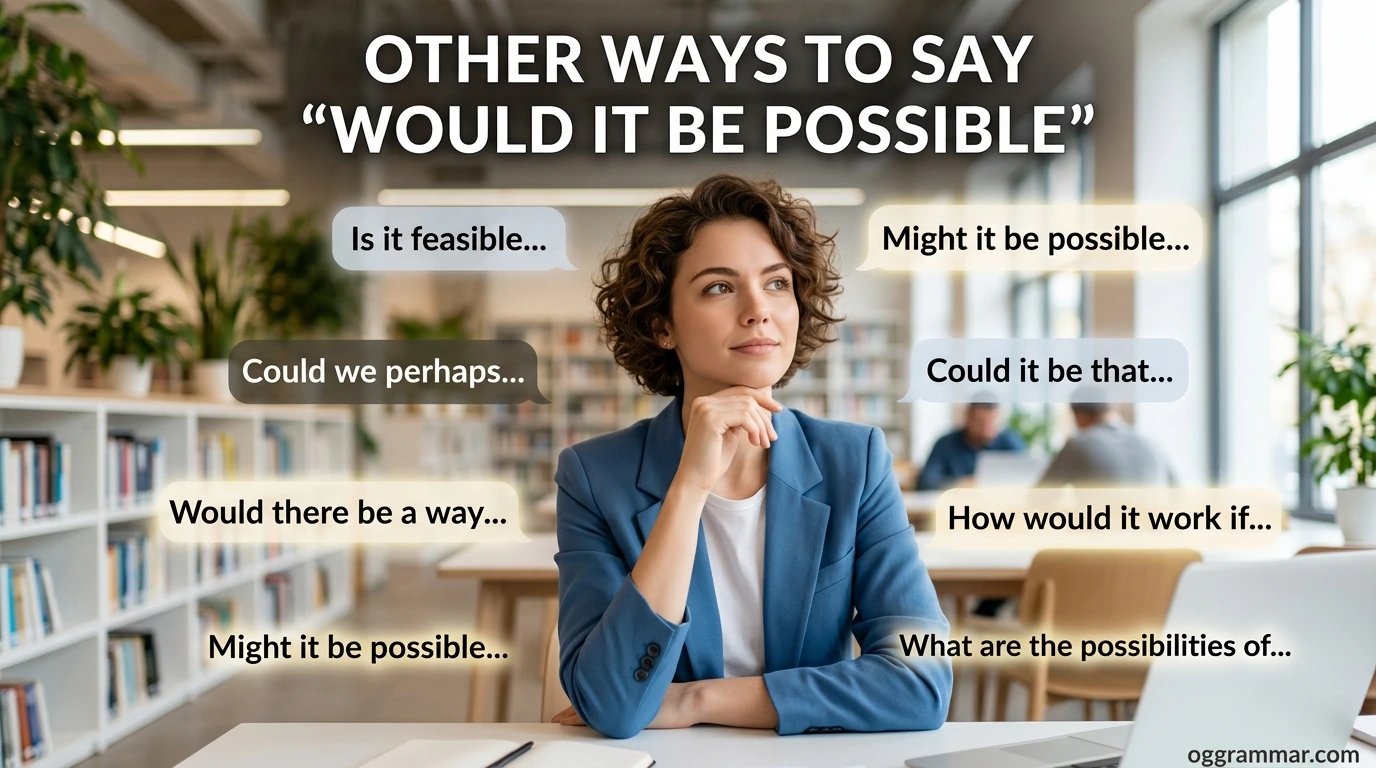
There are moments in conversation when the right wording can completely change the outcome.
Maybe you are writing to a manager, asking a client for flexibility, requesting help from a coworker, or trying to sound polite without being overly formal. In those situations, the phrase “would it be possible” often becomes the safest choice. It is respectful, soft, and professional. But because it is used so often, it can also start to sound repetitive or overly cautious.
That is why people search for better ways to say it.
Strong communication is not only about choosing polite words. An articulate speaker knows how to shape a request so it feels natural, confident, and considerate. An expressive communicator understands that small changes in phrasing can make a message sound warmer, more persuasive, more polished, or more direct. Whether you are improving public speaking, refining eloquent writing, or building communication mastery in daily life, learning alternatives to would it be possible gives you more control over tone and impact.
Think about the difference between these examples:
- “Would it be possible to reschedule?”
- “Could we reschedule?”
- “Is there any chance we could reschedule?”
- “Would you mind if we rescheduled?”
Each one communicates the same basic idea, but the emotional feel changes. One sounds formal, one sounds friendly, one sounds more tentative, and one sounds especially considerate.
That is the power of verbal intelligence.
In this guide, you will discover formal, casual, professional, emotional, and creative alternatives to would it be possible. You will also learn when to use each phrase, what tone it creates, what mistakes to avoid, and how thoughtful language can improve your confidence, clarity, and conversational skill.
What Does “Would It Be Possible” Mean?
The Core Meaning
The phrase would it be possible is a polite way to ask whether something can be done, arranged, allowed, or considered.
It usually means:
- Could this happen?
- Is this feasible?
- Is this allowed?
- Can this be arranged?
- Is there room for flexibility?
Why People Search for Alternatives
People search for alternatives because:
- the phrase can sound overly formal or repetitive
- different situations need different levels of politeness
- business communication may need a more direct tone
- casual conversations may need more natural phrasing
- confident communication often sounds more specific
Did You Know?
In communication psychology, requests that sound confident but respectful are often more effective than requests that sound either too direct or too vague. Tone shapes cooperation.
Why Communication Skills Matter in Requests
Small Phrases Create Big Impressions
An expressive communicator knows that requests are not just about asking for something. They are also about relationship management, respect, and emotional intelligence.
The right wording can:
- increase cooperation
- reduce tension
- build trust
- show professionalism
- make the request feel easier to accept
Good With Words Means More Than Politeness
Being “good with words” does not mean sounding fancy all the time. It means knowing how to adjust language to fit the audience and purpose. A charismatic speaker can sound professional in a meeting, warm in a text message, and tactful in a difficult conversation.
That flexibility is a sign of communication mastery.
Expert Insight
People often respond better to requests that sound considerate and specific. Clear language creates a sense of respect, while vague or overcomplicated language can create hesitation.
Quick Comparison Table of Alternatives
| Alternative Phrase | Tone | Meaning | Best Use Case |
| Could we | Friendly | asking for collaboration | casual professional use |
| May I ask if | Polite | requesting permission or information | formal communication |
| Is there any chance | Hopeful | asking about possibility | soft personal requests |
| Would you mind if | Considerate | asking permission gently | respectful conversations |
| Can it be | Direct | checking whether something is possible | simple workplace requests |
| Is it possible to | Neutral | asking about feasibility | general use |
| Could it be arranged | Professional | asking if something can be organized | business communication |
| Would there be any way | Diplomatic | asking for flexibility | sensitive situations |
| Might it be possible | Formal | polite and cautious inquiry | executive or academic use |
| Is there a way | Practical | asking for a solution | problem-solving conversations |
| If possible | Brief | soft request or condition | emails and texts |
| Any chance | Casual | informal request for possibility | friendly communication |
| I was wondering if | Gentle | polite introduction to a request | considerate communication |
| Perhaps we could | Collaborative | suggesting a joint solution | teamwork and planning |
| Could you possibly | Tactful | direct but soft request | professional emails |
Formal Alternatives to “Would It Be Possible”
Is It Possible to
Meaning
A direct and respectful way to ask whether something can happen.
Tone
Neutral and professional.
Best Use Case
Business emails, customer service, and general formal communication.
Example Sentence
“Is it possible to change the meeting time to Friday?”
Detailed Explanation
This phrase is simple, clear, and widely accepted in professional settings. It sounds less wordy than would it be possible while still remaining polite.
Emotional or Professional Impact
Creates clarity and professionalism without sounding too stiff.
Real-Life Usage Context
Common in:
- office emails
- workplace requests
- client communication
Might It Be Possible
Meaning
A polite and slightly formal way to ask about feasibility.
Tone
Formal, careful, and respectful.
Best Use Case
Executive communication, academic requests, and sensitive situations.
Example Sentence
“Might it be possible to extend the deadline by one day?”
Detailed Explanation
This phrase sounds thoughtful and cautious. It often works well when you want to sound respectful and not overly demanding.
Emotional or Professional Impact
Conveys tact and diplomatic communication.
Real-Life Usage Context
Useful in:
- formal emails
- academic settings
- high-level workplace communication
Could It Be Arranged
Meaning
Asking whether something can be organized or set up.
Tone
Professional and polished.
Best Use Case
Scheduling, events, and business coordination.
Example Sentence
“Could it be arranged for the team to meet earlier next week?”
Detailed Explanation
This phrase shifts the focus from asking directly for a favor to asking about organization or logistics, which often sounds more refined.
Emotional or Professional Impact
Makes the request feel practical and respectful.
Real-Life Usage Context
Common in:
- project management
- event planning
- client scheduling
Friendly and Conversational Alternatives
Could We
Meaning
A collaborative way to suggest or ask for an action.
Tone
Friendly and modern.
Best Use Case
Everyday conversations and casual professional settings.
Example Sentence
“Could we move the call to tomorrow?”
Detailed Explanation
This phrase is shorter and feels less formal than would it be possible. It sounds cooperative rather than distant.
Emotional or Professional Impact
Creates a sense of teamwork and openness.
Real-Life Usage Context
Useful in:
- team chats
- informal emails
- quick conversations
Any Chance
Meaning
A casual way to ask whether something might be possible.
Tone
Relaxed and conversational.
Best Use Case
Friendly requests and informal communication.
Example Sentence
“Any chance we could meet a little earlier?”
Detailed Explanation
This phrase is short and easygoing. It works best when you want to sound natural and approachable.
Emotional or Professional Impact
Feels warm and low-pressure.
Real-Life Usage Context
Common in:
- text messages
- friendly workplace conversations
- casual planning
If Possible
Meaning
A brief, polite request for flexibility.
Tone
Concise and tactful.
Best Use Case
Emails, messages, and short professional requests.
Example Sentence
“If possible, please send the document by noon.”
Detailed Explanation
This phrase is efficient and respectful. It is useful when you want to keep the message short without sounding abrupt.
Emotional or Professional Impact
Creates a calm and polite tone.
Real-Life Usage Context
Frequently used in:
- email communication
- workplace messages
- task requests
Polite and Diplomatic Alternatives
Would You Mind If
Meaning
A considerate way to ask permission.
Tone
Polite and thoughtful.
Best Use Case
Requests that affect another person’s schedule or preference.
Example Sentence
“Would you mind if we rescheduled for Thursday?”
Detailed Explanation
This phrase is excellent when you want to show extra respect. It softens the request by acknowledging the other person’s possible inconvenience.
Emotional or Professional Impact
Feels tactful and emotionally intelligent.
Real-Life Usage Context
Useful in:
- meetings
- personal conversations
- customer service
I Was Wondering If
Meaning
A gentle and polite way to introduce a request.
Tone
Soft and considerate.
Best Use Case
Emails, messages, and careful communication.
Example Sentence
“I was wondering if you might be available later this week.”
Detailed Explanation
This phrase sounds less demanding than a direct request. It is especially useful when you want to sound thoughtful and diplomatic.
Emotional or Professional Impact
Creates warmth and humility.
Real-Life Usage Context
Common in:
- professional emails
- invitations
- respectful conversations
Perhaps We Could
Meaning
A collaborative suggestion rather than a direct demand.
Tone
Polite and cooperative.
Best Use Case
Team discussions and brainstorming.
Example Sentence
“Perhaps we could revisit the issue after lunch.”
Detailed Explanation
This phrase feels constructive and inclusive. It works especially well when trying to maintain harmony.
Emotional or Professional Impact
Encourages collaboration and mutual respect.
Real-Life Usage Context
Useful in:
- meetings
- strategy conversations
- group problem-solving
Direct Yet Respectful Alternatives
Can It Be
Meaning
A simple way to ask whether something is feasible.
Tone
Direct and practical.
Best Use Case
Fast-paced workplace communication.
Example Sentence
“Can it be moved to next week?”
Detailed Explanation
This phrase removes extra wording and gets straight to the point. It is efficient, though slightly less soft than would it be possible.
Emotional or Professional Impact
Creates clarity and speed.
Real-Life Usage Context
Common in:
- operations
- logistics
- quick workplace messages
Could You Possibly
Meaning
A tactful but direct request.
Tone
Professional and respectful.
Best Use Case
Business emails and formal requests.
Example Sentence
“Could you possibly send the updated file today?”
Detailed Explanation
This phrase is one of the best alternatives when you want to sound clear but still polite.
Emotional or Professional Impact
Balances confidence and courtesy.
Real-Life Usage Context
Frequently used in:
- customer communication
- office emails
- formal work requests
Would There Be Any Way
Meaning
A diplomatic way to ask if some flexibility exists.
Tone
Considerate and measured.
Best Use Case
Sensitive requests and negotiations.
Example Sentence
“Would there be any way to complete this by Friday?”
Detailed Explanation
This phrase sounds thoughtful and respectful, especially when the request may be difficult.
Emotional or Professional Impact
Shows awareness and tact.
Real-Life Usage Context
Useful in:
- workplace negotiations
- client communication
- delicate personal requests
How to Choose the Right Alternative Based on Context
For Professional Emails
Best choices:
- Could you possibly
- Is it possible to
- Could it be arranged
For Sensitive Requests
Best choices:
- Would you mind if
- I was wondering if
- Would there be any way
For Friendly Conversations
Best choices:
- Could we
- Any chance
- If possible
For Formal or Executive Settings
Best choices:
- Might it be possible
- Could it be arranged
- Is it possible to
Mini Communication Tip
An articulate speaker knows that a request sounds better when it matches the relationship. Strong communication is not just about asking politely. It is about asking in a way that feels natural for the moment.
Formal vs Casual Expressions
Formal Alternatives
Expressions are ideal when you need to sound polished, careful, or professional.
Examples:
- Might it be possible
- Could it be arranged
- Would there be any way
Casual Alternatives
Casual expressions work well when the relationship is relaxed and the tone can be lighter.
Examples:
- Any chance
- Could we
- If possible
Balanced Alternatives
Some phrases work almost anywhere because they are polite without sounding too stiff.
Examples:
- Is it possible to
- Could you possibly
- I was wondering if
Common Mistakes When Asking for Possibility
Being Too Vague
A vague request can confuse the listener. Clear requests are easier to answer.
Sounding Too Demanding
Direct language without softening can feel rude.
Overusing Formality
Excessively formal wording may sound unnatural in everyday conversation.
Repeating the Same Phrase Constantly
Using “would it be possible” in every request can make your writing feel repetitive.
Words to Avoid in Professional Settings
“Can You Just”
This can sound impatient or dismissive.
“Do This”
Too direct and abrupt for polite communication.
“Is That Even Possible”
May sound skeptical or confrontational if not carefully phrased.
“I Need This Done”
Sometimes acceptable, but often too harsh without softening language.
The Psychology Behind Influential Language
Why Softening Matters
People respond better when they feel respected and not pressured.
Why Clarity Matters
Clear requests reduce friction and make it easier for others to say yes.
Why Tone Changes Outcomes
An expressive communicator understands that people often react to tone before they react to meaning.
Expert Insight
In persuasive language, the most effective requests tend to combine:
- clarity
- respect
- confidence
- emotional intelligence
Practical Tips to Improve Verbal Communication Skills
Practice Tone Matching
Use a different phrase depending on whether the conversation is:
- formal
- casual
- sensitive
- urgent
Read Polished Writing
Eloquent writing helps you notice how skilled writers phrase requests naturally.
Listen to Strong Speakers
Public speaking and leadership communication often rely on thoughtful, tactful phrasing.
Rewrite Common Phrases
Take one phrase like would it be possible and rewrite it in several tones. This strengthens linguistic ability and communication mastery.
Keep It Human
The best phrases sound polite, but not robotic. They feel natural, not scripted.
Scenario-Based Examples
Workplace Email
Instead of: “Would it be possible to move the meeting?”
Say: “Could we move the meeting to Thursday?”
Formal Client Request
Instead of: “Would it be possible to get an extension?”
Say: “Might it be possible to extend the deadline by one day?”
Friendly Text
Instead of: “Would it be possible to meet earlier?”
Say: “Any chance we could meet a bit earlier?”
Sensitive Situation
Instead of: “Would it be possible to change plans?”
Say: “Would you mind if we changed plans?”
Did You Know?
People are more likely to respond positively to requests that feel collaborative rather than commanding. That is why phrases like “could we” and “perhaps we could” often sound more effective than overly formal or overly direct wording.
FAQs
What is a professional alternative to “would it be possible”?
Professional alternatives include:
- Could it be arranged
- Might it be possible
- Could you possibly
What is a casual way to say “would it be possible”?
Casual alternatives include:
- Any chance
- Could we
- If possible
What is the most polite alternative?
“Would you mind if” and “I was wondering if” are among the most tactful choices.
Which phrase is best for emails?
“Could you possibly” and “Is it possible to” work especially well in emails.
What is a softer way to ask for something?
“Would there be any way” and “I was wondering if” sound gentle and respectful.
How do I sound less formal but still polite?
Use:
- Could we
- Any chance
- If possible
Which phrase sounds the most confident?
“Could you possibly” and “Could it be arranged” sound confident yet polite.
Why should I avoid repeating “would it be possible”?
Repetition can make communication sound stiff and less natural.
How can I improve my communication style?
Expand your vocabulary, study strong speakers, and practice adjusting tone for different situations.
What makes a communicator sound articulate?
Clarity, tact, confidence, and the ability to choose the right words for the right moment.
Conclusion
“Would it be possible” is a useful phrase, but it is only one of many ways to ask respectfully, clearly, and effectively. Depending on the situation, alternatives like “Could we,” “I was wondering if,” “Would you mind if,” or “Could it be arranged” may sound more natural, more polished, or more collaborative.
That flexibility is what makes communication strong.
An articulate speaker understands that requests are not just about asking for something. They are also about tone, relationship, and emotional intelligence. An expressive communicator knows how to choose language that feels respectful without sounding weak, and direct without sounding rude.
By practicing varied phrasing, you strengthen your verbal intelligence, improve your public speaking, and build communication mastery in everyday life. The more precisely you choose your words, the more confidently and naturally you will sound.
