
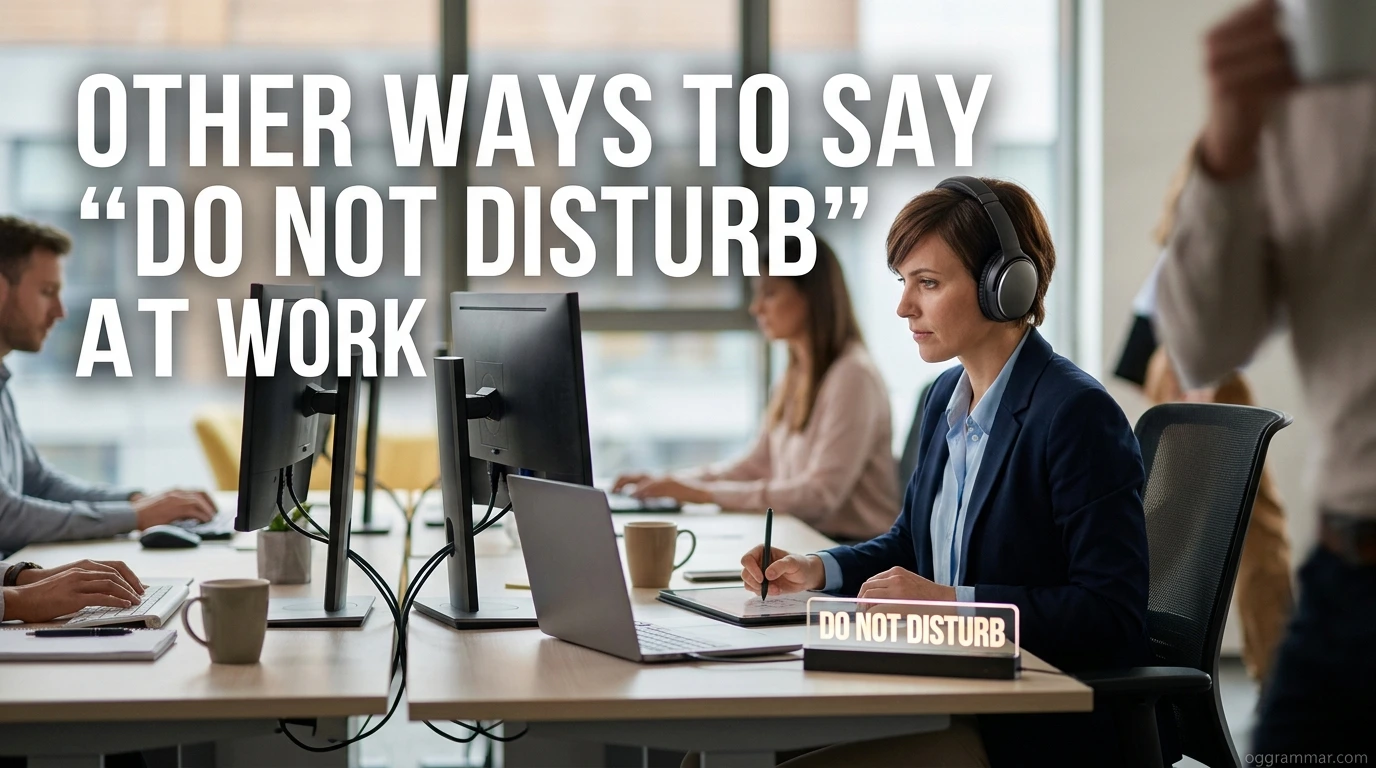
Everyone has been there.
You are deep in concentration, finally making progress on a report, a client proposal, a difficult spreadsheet, or a task that needs real focus, and then the pings start. A coworker drops by “just for a second.” A meeting invite arrives out of nowhere. Someone asks a question that could have waited. Suddenly, your momentum disappears.
That is why people search for better ways to say “do not disturb at work.”
The phrase itself is simple, but in professional communication, simple is not always enough. Sometimes you need wording that sounds polite, firm, respectful, or even a little more strategic. An articulate speaker understands that boundaries are not just about protecting time. They are also about protecting tone, trust, and professionalism. An expressive communicator knows how to set limits without sounding cold. And someone with strong verbal intelligence knows that the right wording can prevent confusion before it starts.
Think about the difference between:
- “Do not disturb.”
- “I’m in focused work time.”
- “Please hold non-urgent questions until later.”
- “I’m unavailable right now, but I’ll respond when I can.”
Each one communicates the same basic idea, but the tone changes the entire experience.
That is where communication mastery matters.
In this guide, you will find formal, casual, professional, and creative alternatives to “do not disturb at work,” along with meanings, tone notes, example sentences, emotional or professional impact, and real-world contexts. You will also learn how to choose the right phrase for your workplace, how strong communication skills shape boundaries, and why persuasive language can make even a boundary sound collaborative rather than defensive.
If you want to sound more polished in emails, more confident in team chats, or more respectful in workplace conversations, these alternatives will help you do exactly that.
What Does “Do Not Disturb at Work” Mean?
The Core Meaning
“Do not disturb at work” means:
- avoid interruptions
- respect focus time
- delay non-urgent communication
- protect productivity
- maintain concentration
It can apply to:
- office settings
- remote work
- meetings
- deep-focus tasks
- presentations
- confidential work
Why People Search for Alternatives
People want alternatives because:
- the phrase can sound abrupt
- different workplaces need different levels of formality
- some situations need softer language
- others need stronger boundaries
- wording can affect how respectful or cooperative the message feels
Did You Know?
Studies on workplace productivity show that it can take several minutes to regain deep focus after an interruption. That is one reason clear boundary-setting language is so valuable.
Why Communication Skills Matter When Setting Boundaries
Strong Communication Prevents Misunderstanding
A charismatic speaker knows that boundaries work best when they are clear, not defensive. People are more likely to respect your time when your message sounds calm and organized.
Words Shape Workplace Relationships
An eloquent writer or expressive communicator can say “I need focus” without sounding rude. That is a skill worth having in any professional environment.
Good With Words Means More Than Being Polite
Being “good with words” is not about sounding fancy. It means knowing:
- when to be direct
- when to soften a message
- when to sound formal
- when to sound collaborative
- when to protect your boundaries clearly
That flexibility is a major part of communication mastery.
Expert Insight
Workplace communication experts often emphasize that people respond better to boundaries framed as shared needs rather than personal rejection.
Quick Comparison Table of Alternatives
| Alternative Phrase | Tone | Meaning | Best Use Case |
| I’m in focus mode | Friendly-professional | I need concentration | casual workplace messages |
| Please hold non-urgent questions | Polite | Delay interruptions | office communication |
| I’m unavailable right now | Neutral | Not accessible at the moment | general professional use |
| I’m working on a deadline | Clear | Focus is on urgent work | team communication |
| I need uninterrupted time | Professional | Concentration is required | formal workplace settings |
| Please check back later | Simple | Reach out again later | everyday communication |
| I’m heads down on a project | Casual | Deeply focused on work | modern team culture |
| Let’s reconnect after this task | Collaborative | Talk later, not now | polite workplace conversations |
| I’m reserving this time for focused work | Formal | Dedicated focus block | meetings and calendars |
| Please limit interruptions | Direct | Reduce interruptions | team norms and office signs |
| I’m in a meeting / deep work block | Neutral | Work should not be interrupted | remote work and calendars |
| Kindly refrain from interruptions | Formal | Please do not interrupt | official or managerial tone |
| I’ll respond when I’m available | Warm | Reply later | email and chat settings |
| Please respect this quiet time | Professional | Honor the need for silence | shared workspaces |
| This is my concentration window | Creative-professional | Time set aside for focus | modern workplaces |
Formal Alternatives to “Do Not Disturb at Work”
I Need Uninterrupted Time
Meaning
A clear statement that focused work requires no interruptions.
Tone
Professional and direct.
Best Use Case
Office communication, emails, and team coordination.
Example Sentence
“I need uninterrupted time this morning to finish the report.”
Explanation
This phrase sounds respectful while still being firm. It explains the reason for the boundary without sounding emotional.
Emotional or Professional Impact
Creates clarity and seriousness.
Real-Life Usage Context
Often used in:
- office settings
- management communication
- calendar notes
Please Hold Non-Urgent Questions
Meaning
A polite request to delay any questions that are not urgent.
Tone
Formal and considerate.
Best Use Case
Team communication and professional messaging.
Example Sentence
“Please hold non-urgent questions until after the meeting.”
Explanation
This phrase sounds organized and practical. It does not reject communication entirely; it simply prioritizes what matters most right now.
Emotional or Professional Impact
Encourages discipline and respect for time.
Real-Life Usage Context
Common in:
- meetings
- project deadlines
- leadership instructions
Kindly Refrain From Interruptions
Meaning
A formal way to ask others not to interrupt.
Tone
Official and polished.
Best Use Case
Formal workplace notices, shared spaces, and leadership communication.
Example Sentence
“Kindly refrain from interruptions during the presentation.”
Explanation
This phrase is highly formal and should be used when you need authority and decorum.
Emotional or Professional Impact
Signals seriousness and professionalism.
Real-Life Usage Context
Useful in:
- conference rooms
- official notices
- formal office policies
I Am Reserving This Time for Focused Work
Meaning
A scheduled period has been set aside for concentration.
Tone
Professional and structured.
Best Use Case
Calendar blocks, email signatures, and time-management communication.
Example Sentence
“I am reserving this time for focused work and will reply afterward.”
Explanation
This phrase feels polished, intentional, and modern. It also explains the reason behind the boundary, which improves cooperation.
Emotional or Professional Impact
Promotes respect and planning.
Real-Life Usage Context
Frequently used in:
- remote work calendars
- productivity culture
- executive schedules
Friendly and Modern Workplace Alternatives
I’m in Focus Mode
Meaning
A casual way to signal deep concentration.
Tone
Friendly and contemporary.
Best Use Case
Team chats and modern office environments.
Example Sentence
“I’m in focus mode for the next hour, but I’ll check messages later.”
Explanation
This phrase sounds natural and approachable. It works especially well in workplaces that value flexibility and informal communication.
Emotional or Professional Impact
Creates clarity without sounding stiff.
Real-Life Usage Context
Popular in:
- startup culture
- remote teams
- creative workplaces
I’m Heads Down on a Project
Meaning
A casual phrase meaning someone is deeply focused on a task.
Tone
Modern and conversational.
Best Use Case
Friendly office communication.
Example Sentence
“I’m heads down on this project, so I may be slow to respond.”
Explanation
This phrase is common in collaborative professional environments. It signals concentration while remaining relaxed.
Emotional or Professional Impact
Feels efficient and relatable.
Real-Life Usage Context
Often used in:
- tech teams
- creative agencies
- remote work chats
Please Check Back Later
Meaning
A gentle request to return at a later time.
Tone
Simple and courteous.
Best Use Case
General communication and customer-facing interactions.
Example Sentence
“Please check back later when I’ve finished this task.”
Explanation
This phrase is easy to understand and works in many situations.
Emotional or Professional Impact
Creates a calm and neutral boundary.
Real-Life Usage Context
Common in:
- office support
- reception settings
- team communication
Polite and Collaborative Alternatives
I’m Working on a Deadline
Meaning
A direct explanation that urgent work is in progress.
Tone
Professional and practical.
Best Use Case
Team communication and work prioritization.
Example Sentence
“I’m working on a deadline right now, so I’ll respond after this is done.”
Explanation
This phrase is effective because it explains the reason clearly, which helps others respect your time.
Emotional or Professional Impact
Encourages understanding and cooperation.
Real-Life Usage Context
Useful in:
- project management
- client updates
- office collaboration
Let’s Reconnect After This Task
Meaning
A collaborative way to delay conversation until later.
Tone
Warm and professional.
Best Use Case
Team chats, leadership conversations, and client communication.
Example Sentence
“Let’s reconnect after this task so I can give you my full attention.”
Explanation
This phrase makes the boundary feel cooperative rather than dismissive.
Emotional or Professional Impact
Builds trust and friendliness.
Real-Life Usage Context
Frequently used in:
- meetings
- email follow-ups
- team coordination
I’ll Respond When I’m Available
Meaning
A calm statement that response will come later.
Tone
Neutral and polite.
Best Use Case
Email, messaging apps, and general professional communication.
Example Sentence
“I’ll respond when I’m available, but I wanted to flag this now.”
Explanation
This phrase creates realistic expectations and avoids sounding harsh.
Emotional or Professional Impact
Makes boundaries clear while staying respectful.
Real-Life Usage Context
Common in:
- remote work
- executive messaging
- customer communication
Direct but Respectful Alternatives
Please Limit Interruptions
Meaning
A clear request to reduce interruptions.
Tone
Direct and professional.
Best Use Case
Shared office spaces and team norms.
Example Sentence
“Please limit interruptions while I’m handling this client proposal.”
Explanation
This phrase works well when you need a stronger boundary without sounding hostile.
Emotional or Professional Impact
Creates structure and seriousness.
Real-Life Usage Context
Useful in:
- busy offices
- deadlines
- presentations
Please Respect This Quiet Time
Meaning
A polite request for silence or fewer interruptions.
Tone
Professional and calm.
Best Use Case
Focus blocks, shared spaces, and policy messaging.
Example Sentence
“Please respect this quiet time while the team finalizes the report.”
Explanation
This phrase sounds polite while still being firm.
Emotional or Professional Impact
Encourages mutual respect.
Real-Life Usage Context
Common in:
- open offices
- libraries
- work-from-home environments
This Is My Concentration Window
Meaning
A creative-professional way to describe a focus period.
Tone
Modern and thoughtful.
Best Use Case
Productivity culture, scheduling, and team communication.
Example Sentence
“This is my concentration window, so I’ll reply after 3 PM.”
Explanation
This phrase sounds more intentional and modern than “do not disturb.”
Emotional or Professional Impact
Signals disciplined time management.
Real-Life Usage Context
Often used in:
- remote work
- calendar blocks
- productivity systems
How to Choose the Right Alternative Based on Context
For Formal Workplace Settings
Best choices:
- I need uninterrupted time
- Kindly refrain from interruptions
- I am reserving this time for focused work
For Friendly Team Communication
Best choices:
- I’m in focus mode
- I’m heads down on a project
- Please check back later
For Leadership or Management
Best choices:
- Please limit interruptions
- Please respect this quiet time
- I’m working on a deadline
For Remote or Flexible Work Environments
Best choices:
- I’ll respond when I’m available
- Let’s reconnect after this task
- This is my concentration window
Mini Communication Tip
An articulate speaker knows that the best boundary sounds clear but not personal. Strong communication turns “I need space” into “I need time to do my best work.”
Formal vs Casual Expressions
Formal Alternatives
These sound polished and work well in business settings:
- Kindly refrain from interruptions
- I am reserving this time for focused work
- Please limit interruptions
Casual Alternatives
These feel more natural in relaxed team cultures:
- I’m in focus mode
- I’m heads down on a project
- Please check back later
Balanced Alternatives
These work in many environments because they are polite and clear:
- I’m working on a deadline
- I’ll respond when I’m available
- Let’s reconnect after this task
Why Tone Matters
Communication mastery includes knowing when to sound firm, when to soften a request, and when to explain the reason behind a boundary. That balance helps people respect your time without feeling pushed away.
Common Mistakes When Setting Boundaries at Work
Sounding Abrupt
Phrases like “Don’t bother me” can feel rude or defensive.
Overexplaining
You do not always need a long explanation. Clear and concise wording is often more effective.
Using Humor That Weakens the Message
Jokes like “I’m buried alive, don’t talk to me” may sound funny but can blur the boundary.
Ignoring Workplace Culture
A startup may accept “focus mode,” while a formal office may prefer “I am reserving this time for focused work.”
Words to Avoid in Professional Settings
“Leave Me Alone”
Too harsh for most workplace communication.
“I’m Busy, Go Away”
Can sound hostile and dismissive.
“Bug Me Later”
Too casual and potentially confusing.
“I’m Not Taking Anything Right Now”
May sound abrupt unless used in a specific support context.
The Psychology Behind Influential Language
Clear Boundaries Reduce Friction
People often respect limits more when they understand them. Words like “deadline,” “focused work,” and “available later” make your boundary easier to accept.
Respectful Language Preserves Relationships
An expressive communicator uses language that protects both productivity and rapport.
Strong Phrasing Improves Cooperation
When your wording sounds calm and reasonable, people are less likely to react defensively.
Expert Insight
Workplace communication research often shows that polite, reason-based boundaries are more effective than vague or emotional requests.
Practical Tips to Improve Verbal Communication Skills
State the Reason Briefly
You do not need to overexplain, but one short reason can help:
- focused work
- deadline
- meeting
- deep concentration
Match the Tone to the Audience
A team of designers may be comfortable with “focus mode,” while executives may prefer “reserved for focused work.”
Practice Clear Boundaries
The more you practice, the more natural it becomes to set limits without sounding rude.
Read Eloquent Writing
Strong writing teaches you how to phrase boundaries in a polished, human way.
Observe Skilled Speakers
Public speaking and leadership communication often rely on clear, confident, and respectful wording.
Scenario-Based Examples
Office Message
Instead of: “Do not disturb.”
Try: “I’m working on a deadline, so I may be slow to respond.”
Remote Work Status
Instead of: “Do not disturb.”
Try: “I’m in focus mode and will check messages later.”
Formal Office Sign
Instead of: “Do not disturb.”
Try: “Please respect this quiet time while I complete a task.”
Friendly Team Chat
Instead of: “Do not disturb.”
Try: “I’m heads down on this project for the next hour.”
Did You Know?
People are more likely to respect boundaries that sound considerate and specific rather than vague and commanding.
Did You Know?
Using reason-based language can reduce interruptions because it helps others understand your need for focus.
Did You Know?
A charismatic speaker often frames boundaries as a shared need for productivity rather than a personal rejection.
Practical Phrases Readers Can Use Immediately
Professional Alternatives
- I need uninterrupted time
- I am reserving this time for focused work
- Please limit interruptions
Friendly Alternatives
- I’m in focus mode
- I’m heads down on a project
- Please check back later
Polite Alternatives
- I’m working on a deadline
- I’ll respond when I’m available
- Let’s reconnect after this task
Formal Alternatives
- Kindly refrain from interruptions
- Please respect this quiet time
- I am reserving this time for focused work
FAQs
What is a professional way to say “do not disturb at work”?
Professional alternatives include:
- I need uninterrupted time
- I am reserving this time for focused work
- Please limit interruptions
What is a casual way to say “do not disturb at work”?
Casual options include:
- I’m in focus mode
- I’m heads down on a project
- Please check back later
How do I say I need quiet without sounding rude?
Use polite, reason-based phrases such as:
- I’m working on a deadline
- I’ll respond when I’m available
- Please respect this quiet time
What is the best phrase for a shared office?
“Please limit interruptions” or “Please respect this quiet time” works well in shared spaces.
What is a good status message for focus time?
“I’m in focus mode” or “I’m reserving this time for focused work” are both effective.
Why should I avoid saying “leave me alone” at work?
It sounds hostile and can damage workplace relationships.
How can I set boundaries politely?
State your need clearly, give a short reason, and choose calm language.
What phrase works best in emails?
“I need uninterrupted time” or “I’ll respond when I’m available” works well.
How can I sound more articulate at work?
Practice concise, considerate wording and expand your professional vocabulary.
Why does tone matter so much?
Tone affects how people interpret your message, even when the meaning is the same.
Conclusion
“Do not disturb at work” is a useful phrase, but it is only one way to protect your focus and set healthy boundaries. Depending on the situation, alternatives like “I’m in focus mode,” “Please respect this quiet time,” “I need uninterrupted time,” or “I’ll respond when I’m available” may sound more polished, more collaborative, or more professional.
That flexibility is a major part of communication mastery.
An articulate speaker understands that boundaries are not just instructions. They are messages about priorities, respect, and professionalism. An expressive communicator knows how to say “I need space” without sounding harsh. And someone with strong verbal intelligence knows how to choose phrasing that supports both productivity and relationships.
By practicing these alternatives, you strengthen your communication skills, improve your workplace presence, and build a more confident, respectful way of speaking and writing. In the end, the right words help others understand not just that you need focus, but why that focus matters.
