
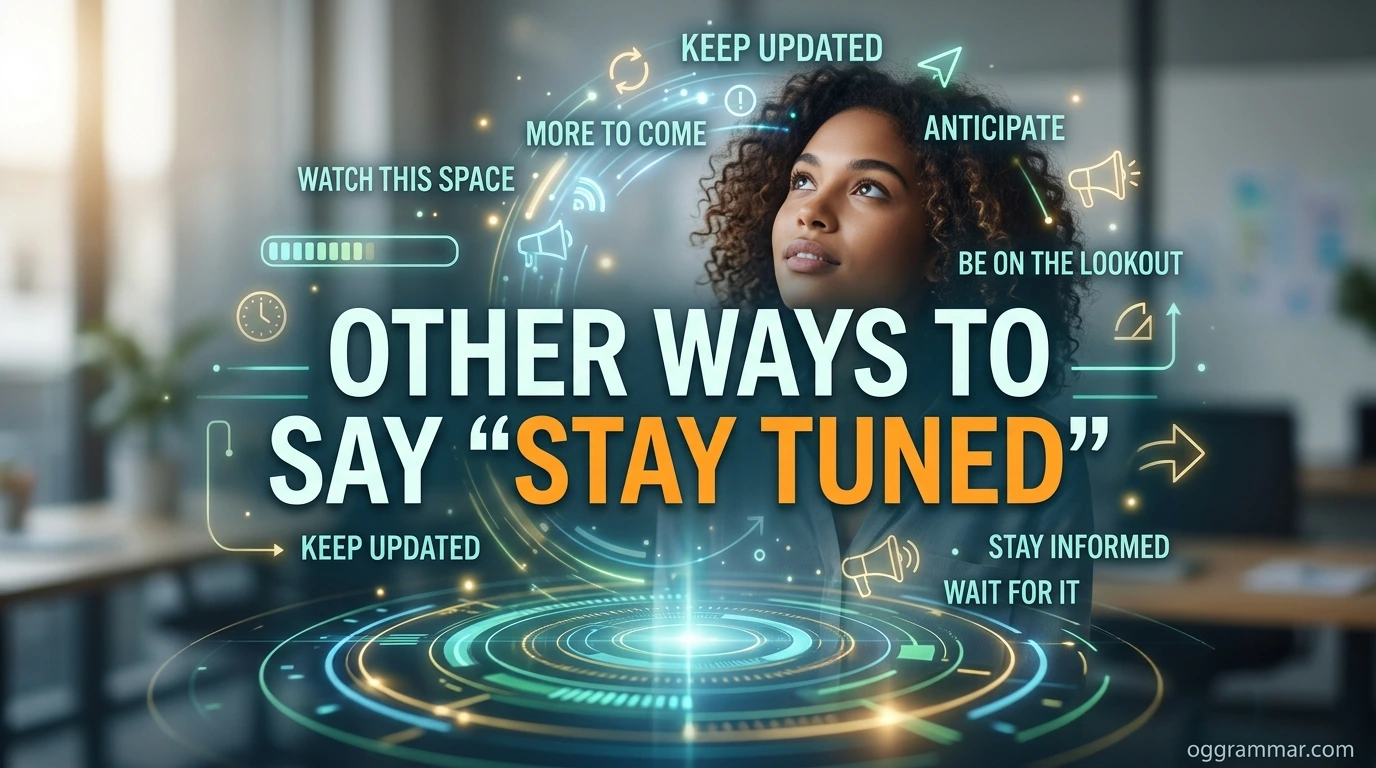
Some phrases are small, but they do a lot of work.
“Stay tuned” is one of those phrases. It is short, familiar, and easy to understand. It tells people that more information is coming and that they should pay attention. But many writers, marketers, creators, and everyday communicators search for other ways to say it because they want their wording to feel fresher, more polished, more natural, or better suited to the platform and audience.
That is where communication skills matter. An articulate speaker knows that even a simple teaser can shape anticipation. An expressive communicator understands that the same message can sound exciting, professional, playful, or reassuring depending on the wording. Whether you are refining eloquent writing, building verbal intelligence, improving storytelling skills, or strengthening communication mastery, having alternatives to “stay tuned” gives you more flexibility and style.
People who are good with words often notice this instinctively. They know that language is not just about meaning — it is about momentum. A good phrase can keep an audience engaged, a customer curious, or a reader looking forward to the next update. The wrong one can sound generic, stiff, or overused.
In this guide, you will find the best other ways to say “stay tuned”, along with meanings, tones, best-use cases, example sentences, detailed explanations, emotional or professional impact, and real-life usage context. You will also learn how to choose the right phrase based on context, what to avoid in professional settings, and how subtle changes in wording can make your message feel more polished and memorable.
Why wording matters when you want people to keep watching or reading
A teaser is not just a placeholder. It is a promise.
A persuasive communicator understands that the words you choose can make people feel:
- curious
- included
- excited
- informed
- valued
- ready to return
That matters because “stay tuned” is often used at a moment of transition. It may be ending a post, leading into an announcement, or creating anticipation for an update. A more precise phrase can better match your audience and tone.
Communication mastery is not just about saying “more later.” It is about making the wait feel worthwhile.
Did you know?
People are often more likely to return when the wording around an update feels specific and confident rather than vague. A clear teaser can increase interest and trust at the same time.
Quick comparison table of alternatives
| Alternative Phrase | Tone | Meaning | Best Use Case |
| Keep an eye out | Friendly, casual | Watch for something upcoming | social media, emails, casual updates |
| Watch this space | Confident, modern | Something is coming soon | marketing, launches, announcements |
| More to come | Simple, versatile | Additional information will follow | newsletters, blogs, social posts |
| Stay posted | Casual, friendly | Keep paying attention for updates | internal communication, updates |
| Stay connected | Warm, ongoing | Maintain contact for future news | community building, newsletters |
| Keep checking back | Direct, practical | Return later for more information | websites, product pages |
| Coming soon | Clear, promotional | The thing is arriving shortly | product launches, events |
| We’ll be in touch | Professional, reassuring | You will receive a follow-up | business emails, client communication |
| More updates soon | Neutral, informative | Future information will be provided | reports, project updates |
| Look out for updates | Direct, encouraging | Pay attention for new information | announcements, social posts |
| Don’t go anywhere | Playful, engaging | Stay around because more is coming | live events, content creators |
| More on the way | Friendly, upbeat | Additional content or news is arriving | blogs, campaigns, social channels |
| Stay with us | Warm, inclusive | Remain engaged for what follows | presentations, videos, branded content |
| Watch for details | Polished, informative | Pay attention for specifics later | professional announcements |
| The full story is coming | Engaging, dramatic | More complete information will be shared | storytelling, media, campaigns |
Best other ways to say “Stay Tuned”
Keep an Eye Out
Meaning
You are asking people to watch for something that will arrive or be revealed later.
Tone
Friendly, casual, and natural.
Best Use Case
Social media posts, email updates, casual announcements.
Example Sentence
“Keep an eye out — we’ll be sharing the full details next week.”
Detailed Explanation
This phrase works well because it sounds conversational without being too formal. It creates anticipation while staying relaxed and human. It is especially useful when you want people to feel included in an ongoing update.
Emotional or Professional Impact
It feels approachable, warm, and lightly exciting.
Real-Life Context
Used in newsletters, product announcements, and casual brand communication.
Watch This Space
Meaning
You are telling people that something important or interesting will be revealed soon.
Tone
Confident, modern, and slightly dramatic.
Best Use Case
Marketing, product launches, announcements, teaser content.
Example Sentence
“Watch this space — we’ve got something exciting coming soon.”
Detailed Explanation
This phrase has a strong teaser quality. It works especially well when the upcoming information is meant to create interest or buzz. It sounds more stylish than “stay tuned” and slightly more deliberate.
Emotional or Professional Impact
It creates intrigue and anticipation.
Real-Life Context
Used in launch campaigns, content previews, and brand messaging.
More to Come
Meaning
Additional information, content, or updates will follow.
Tone
Simple, versatile, and polished.
Best Use Case
Blog posts, newsletters, social captions, presentations.
Example Sentence
“This is just the beginning — more to come.”
Detailed Explanation
This is one of the easiest alternatives because it is broad and flexible. It works in almost any context where you want to hint that the story is not finished yet.
Emotional or Professional Impact
It feels open, forward-moving, and confident.
Real-Life Context
Used in articles, email teasers, event pages, and social media.
Stay Posted
Meaning
You are asking people to keep paying attention for future updates.
Tone
Casual, friendly, and current.
Best Use Case
Community updates, internal teams, casual communication.
Example Sentence
“Stay posted for the schedule update later this afternoon.”
Detailed Explanation
This phrase feels especially natural in digital communication. It sounds modern and easy to use without feeling forced.
Emotional or Professional Impact
It feels relaxed and connected.
Real-Life Context
Used in group chats, social posts, and informal business communication.
Stay Connected
Meaning
You are encouraging ongoing attention or relationship-building.
Tone
Warm, inclusive, and relationship-focused.
Best Use Case
Newsletters, communities, brand audiences, networking.
Example Sentence
“Stay connected for the latest announcements and behind-the-scenes updates.”
Detailed Explanation
This phrase is especially good when the goal is not just to hold attention, but to build a long-term connection. It works well for brands and creators who want to sound relational rather than transactional.
Emotional or Professional Impact
It feels inviting, loyal, and community-oriented.
Real-Life Context
Used in newsletters, membership programs, and social campaigns.
Keep Checking Back
Meaning
You are asking people to return later for more information.
Tone
Direct, practical, and clear.
Best Use Case
Websites, product pages, service updates.
Example Sentence
“Keep checking back for the latest version and new details.”
Detailed Explanation
This phrase is especially useful online because it clearly tells the audience what to do next. It is straightforward and effective when updates are expected regularly.
Emotional or Professional Impact
It feels efficient and clear.
Real-Life Context
Used on websites, FAQ pages, and online update sections.
Coming Soon
Meaning
Something is arriving or being released in the near future.
Tone
Clear, polished, and promotional.
Best Use Case
Products, events, features, announcements.
Example Sentence
“Coming soon: our new online booking system.”
Detailed Explanation
This phrase is one of the strongest and most common alternatives in marketing. It works because it is short, direct, and instantly understandable.
Emotional or Professional Impact
It creates anticipation and professionalism.
Real-Life Context
Used in product launches, websites, posters, and social media promotions.
We’ll Be in Touch
Meaning
You will follow up later with more information.
Tone
Professional, reassuring, and polite.
Best Use Case
Business emails, client communication, formal follow-up.
Example Sentence
“We’ll be in touch once the next phase is ready.”
Detailed Explanation
This phrase is ideal when you want to sound organized and respectful. It tells the recipient they won’t be forgotten and that more communication is coming.
Emotional or Professional Impact
It feels reliable, professional, and courteous.
Real-Life Context
Used in customer service, consulting, HR, and business correspondence.
More Updates Soon
Meaning
Additional information will be shared soon.
Tone
Neutral, informative, and practical.
Best Use Case
Project updates, internal communication, informational posts.
Example Sentence
“More updates soon as we finalize the final details.”
Detailed Explanation
This phrase is broad enough to work in many contexts. It is especially useful when you want to promise future information without being overly dramatic.
Emotional or Professional Impact
It feels steady and informative.
Real-Life Context
Used in work updates, project boards, and general announcements.
Look Out for Updates
Meaning
You are telling people to pay attention for new information.
Tone
Direct, encouraging, and clear.
Best Use Case
Announcements, updates, social posts, websites.
Example Sentence
“Look out for updates later this week on the new release.”
Detailed Explanation
This phrase is slightly more active than “stay tuned.” It works well when you want your audience to be alert and engaged.
Emotional or Professional Impact
It feels alert, energetic, and informative.
Real-Life Context
Used in public announcements, newsletters, and online updates.
Don’t Go Anywhere
Meaning
A playful way to tell people to stay and keep watching or reading.
Tone
Casual, lively, and engaging.
Best Use Case
Live streams, videos, content creators, informal presentations.
Example Sentence
“Don’t go anywhere — the best part is coming up next.”
Detailed Explanation
This phrase is very effective in entertainment and content marketing because it creates immediate curiosity. It sounds dramatic in a fun way and works best when the audience is already engaged.
Emotional or Professional Impact
It creates excitement and pull.
Real-Life Context
Used in videos, livestreams, podcasts, and dramatic transitions.
More on the Way
Meaning
Additional information, content, or features are coming.
Tone
Friendly, upbeat, and casual.
Best Use Case
Blogs, social media, campaign messaging.
Example Sentence
“More on the way, so stay connected for the next update.”
Detailed Explanation
This phrase feels fresh and modern. It suggests movement and momentum, which makes it great for creative brands or content creators.
Emotional or Professional Impact
It feels lively and optimistic.
Real-Life Context
Used in marketing, social posts, and content teasers.
Stay With Us
Meaning
You are asking the audience to continue paying attention.
Tone
Warm, inclusive, and engaging.
Best Use Case
Presentations, videos, storytelling, content transitions.
Example Sentence
“Stay with us — we’re about to share the key takeaway.”
Detailed Explanation
This phrase is especially strong in spoken or video content because it makes the audience feel like part of the journey. It creates a sense of continuity and closeness.
Emotional or Professional Impact
It feels personal and inviting.
Real-Life Context
Used in presentations, webinars, podcasts, and content videos.
Watch for Details
Meaning
You are asking people to look out for specific information later.
Tone
Polished, informative, and clear.
Best Use Case
Professional announcements, instructions, formal updates.
Example Sentence
“Watch for details in the next email regarding the schedule.”
Detailed Explanation
This phrase is ideal when you want to sound organized and professional. It focuses the audience on specifics rather than general anticipation.
Emotional or Professional Impact
It feels precise and dependable.
Real-Life Context
Used in workplace emails, official notices, and structured communication.
The Full Story Is Coming
Meaning
More complete information will be revealed later.
Tone
Engaging, dramatic, and slightly storytelling-focused.
Best Use Case
Storytelling, branded content, launches, announcements.
Example Sentence
“The full story is coming soon, so keep an eye out.”
Detailed Explanation
This phrase is especially effective when you want to create curiosity. It suggests depth and completeness, which makes it a strong teaser phrase.
Emotional or Professional Impact
It creates intrigue and anticipation.
Real-Life Context
Used in storytelling posts, campaigns, and video intros.
Formal vs casual alternatives
Formal alternatives
Use these when you want to sound polished and professional:
- watch for details
- we’ll be in touch
- more updates soon
- coming soon
- stay connected
Casual alternatives
Use these when you want to sound more natural and conversational:
- keep an eye out
- stay posted
- don’t go anywhere
- more on the way
- stay with us
Why tone matters
An articulate speaker knows that a teaser is not one-size-fits-all. Communication mastery means choosing the phrase that fits the audience, the platform, and the kind of anticipation you want to create.
How to choose the right phrase based on context
For marketing and launches
Use:
- watch this space
- coming soon
- more to come
- the full story is coming
For business updates
Use:
- we’ll be in touch
- more updates soon
- watch for details
- keep checking back
For social media and casual content
Use:
- keep an eye out
- stay posted
- don’t go anywhere
- more on the way
For community and brand building
Use:
- stay connected
- stay with us
- look out for updates
- more to come
Mini communication tip
An expressive communicator does not repeat “stay tuned” everywhere. They choose the phrase that fits the platform, the audience, and the mood they want to create.
Why communication skills matter in teasers and updates
A teaser is not just about holding attention. It is about managing expectation.
People notice whether you sound:
- confident
- clear
- inviting
- professional
- energetic
- trustworthy
That is why people who are good with words often vary their teaser lines. They know that small shifts in language can make anticipation feel exciting rather than vague.
Common mistakes when using these alternatives
Being too vague
If the audience does not know what to expect, the teaser loses power.
Sounding too formal for a casual audience
“Watch for details” may feel stiff in a playful social post.
Being too casual for a professional update
“Don’t go anywhere” may not fit a corporate announcement.
Overusing the same phrase
A little variation keeps content and communication from feeling repetitive.
Words to avoid in professional settings
Avoid wording that may sound too slangy, too dramatic, or too vague in professional or formal contexts:
- “hang tight” in formal emails
- “don’t disappear” in client communication
- “something epic is coming” when the tone should be understated
- “keep stalking our page” as a joke in formal settings
- any phrase that sounds overly casual in corporate communication
Better professional choices
Use:
- we’ll be in touch
- more updates soon
- watch for details
- coming soon
- stay connected
The psychology behind influential language
A teaser does more than inform. It shapes curiosity.
A charismatic speaker understands that:
- short phrases reduce friction
- specific phrases build trust
- warm phrases build connection
- suspenseful phrases maintain attention
That is why persuasive language matters. It helps your audience feel like the next update is worth waiting for.
Did you know?
People are more likely to stay engaged when a message gives them a reason to expect value. A good teaser makes the wait feel purposeful.
Practical tips to improve verbal communication skills
Be specific
Choose the phrase that tells people what kind of update to expect.
Match tone to audience
Use polished wording in professional settings and relaxed wording with casual audiences.
Keep it natural
The best phrase sounds like something you would genuinely say.
Practice variation
Try rephrasing “stay tuned” in different tones:
- formal
- casual
- playful
- promotional
Observe strong communicators
Public speaking, eloquent writing, and everyday conversation all improve when you notice how skilled speakers hold attention with style and clarity.
Scenario-based examples
In a product announcement
Instead of: “Stay tuned.”
Try: “Watch this space — more is coming soon.”
Why it works: It feels modern and promotional.
In a work update
Instead of: “Stay tuned.”
Try: “We’ll be in touch with more updates soon.”
Why it works: It sounds professional and clear.
In a social media post
Instead of: “Stay tuned.”
Try: “Don’t go anywhere — the next update is coming soon.”
Why it works: It feels engaging and lively.
In a newsletter
Instead of: “Stay tuned.”
Try: “Keep an eye out for our next announcement.”
Why it works: It sounds polished and audience-friendly.
Practical phrases readers can use immediately
Formal
- we’ll be in touch
- watch for details
- more updates soon
- coming soon
- stay connected
Friendly
- keep an eye out
- stay posted
- more to come
- look out for updates
- more on the way
Casual
- don’t go anywhere
- stay with us
- keep checking back
- chat soon not applicable here, so avoid it
- stay tuned no problem, but alternatives can vary
Promotional
- watch this space
- coming soon
- the full story is coming
- more to come
FAQs
What is a professional way to say “stay tuned”?
Professional alternatives include:
- we’ll be in touch
- more updates soon
- watch for details
- stay connected
- coming soon
What is a casual alternative?
Casual alternatives include:
- keep an eye out
- stay posted
- don’t go anywhere
- more on the way
What phrase sounds the most polished?
“Watch for details” and “we’ll be in touch” sound especially polished.
What should I use in marketing?
Use:
- watch this space
- coming soon
- more to come
- the full story is coming
Is “stay tuned” too common?
Not at all. It is perfectly fine, but alternatives can make your wording feel fresher and more tailored to the audience.
How can I sound more articulate in teaser writing?
Choose wording that fits the audience and avoid repeating the same phrase every time.
What is the difference between “more to come” and “coming soon”?
“More to come” suggests ongoing content or updates, while “coming soon” implies a specific thing is arriving shortly.
Why does tone matter so much?
Because tone affects whether the teaser feels playful, professional, exciting, or overly vague.
How can I improve communication mastery?
Practice rephrasing common teaser phrases and observe how effective communicators hold attention in different contexts.
Can better wording make a teaser more persuasive?
Absolutely. Thoughtful phrasing can make anticipation feel more exciting and more credible.
Conclusion
Learning other ways to say stay tuned helps your communication sound more natural, more polished, and more adaptable in different situations. Whether you choose keep an eye out, watch this space, more to come, we’ll be in touch, coming soon, stay connected, or the full story is coming, the right phrase can make your message feel more genuine and memorable.
An articulate speaker understands that a teaser is not just a placeholder. It is a promise. An expressive communicator knows how to make anticipation sound professional, casual, playful, or exciting depending on the moment. And someone with strong communication mastery knows that the best words are the ones that fit the audience, the platform, and the feeling behind the update.
The more intentionally you choose your words, the more confident, kind, and memorable your communication becomes.
