
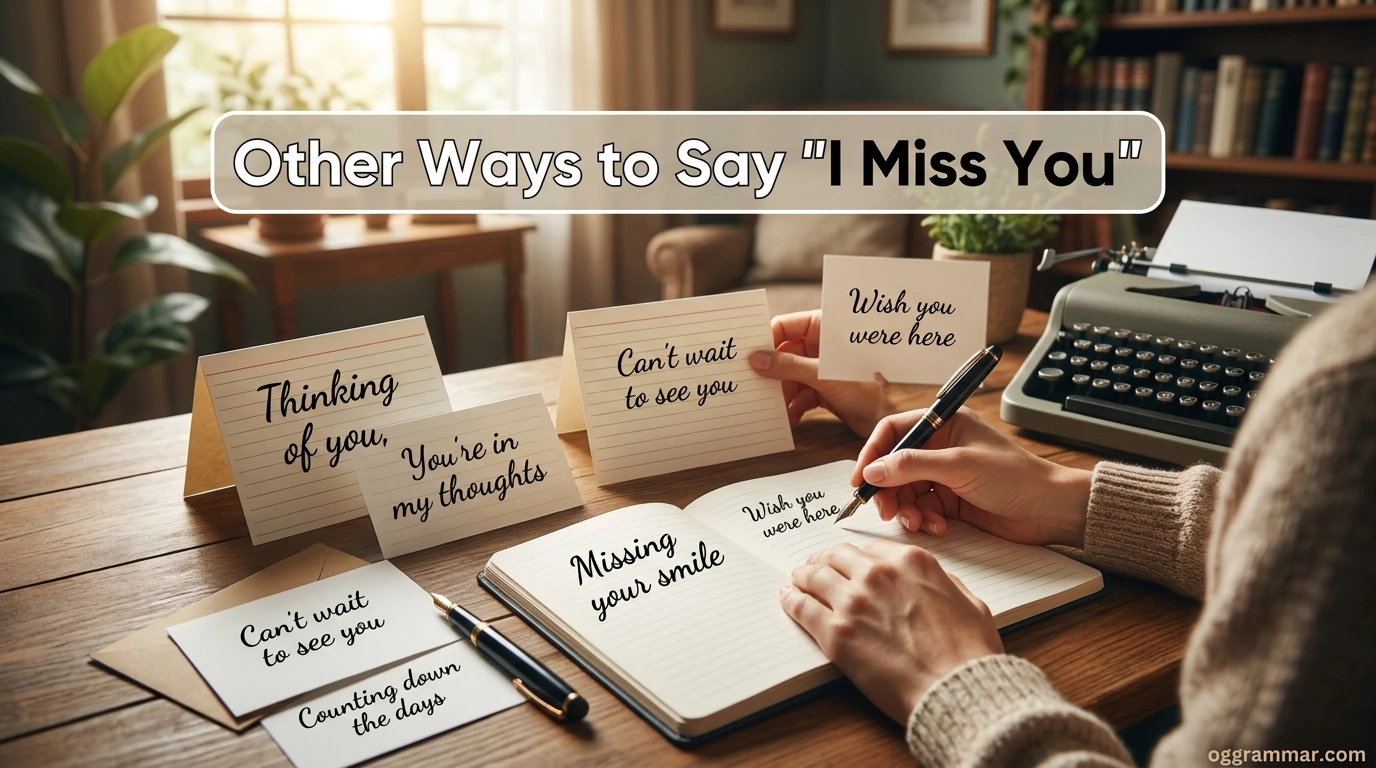
There is a particular kind of silence that makes people reach for their phones.
Maybe it happens late at night. Maybe it happens after a long trip, a breakup, a move, or even a normal week that somehow feels longer than usual. In those moments, “I miss you” can feel too small for the emotion behind it. The feeling is real, but the phrase can sound repeated, plain, or not quite deep enough.
That is why people search for better ways to say it. They do not just want words. They want words that carry warmth, honesty, and the right amount of vulnerability. A good communicator knows that language can either flatten emotion or give it shape. An articulate speaker understands that even a simple sentence can change depending on tone, timing, and relationship.
People who are good with words often notice this instinctively. They know that “I miss you” can be softened, deepened, made more poetic, made more casual, or made more formal depending on who is listening. A thoughtful phrase can sound comforting, romantic, respectful, or deeply personal. The wrong one can feel too blunt, too intense, or too generic.
This guide explores the best other ways to say “I miss you”, along with their meanings, tones, best-use cases, example sentences, emotional impact, and real-life usage context. It also covers formal and casual alternatives, emotional language styles, common mistakes, and practical communication tips so your message sounds natural and memorable.
Why wording matters when saying you miss someone
Saying you miss someone is not just about admitting absence. It is about creating connection.
A persuasive communicator understands that the words you choose can make the other person feel:
- valued
- remembered
- wanted
- loved
- important
- emotionally close
That matters because “I miss you” can mean different things depending on the relationship. It might sound romantic, parental, friendly, nostalgic, or even professional if phrased carefully. The right alternative can help you express the exact shade of feeling you want to communicate.
An expressive communicator knows that communication mastery is not just about being honest. It is about being honest in the right way for the moment.
Did you know?
People often respond more strongly to a message when it feels specific rather than generic. A phrase that names the feeling in a unique way can leave a deeper impression than a simple standard line.
Quick comparison table of alternatives
| Alternative Phrase | Tone | Meaning | Best Use Case |
| I wish you were here | Warm, heartfelt | You want the person’s presence now | romantic, close relationships |
| It’s not the same without you | Emotional, personal | Their absence is clearly felt | family, friends, partners |
| I can’t wait to see you | Eager, positive | You are looking forward to reunion | romantic, friendship, family |
| You’ve been on my mind | Soft, thoughtful | You have been thinking about them often | caring messages, gentle check-ins |
| I feel your absence | Poetic, formal | Their absence is emotionally noticeable | writing, reflective messages |
| I keep thinking about you | Personal, warm | The person stays in your thoughts | romantic and caring contexts |
| I’m looking forward to seeing you | Hopeful, balanced | You anticipate being together again | general and professional-adjacent use |
| Your presence is missed | Polished, respectful | Their absence is being noticed | formal, group, workplace-adjacent |
| It feels lonely without you | Emotional, direct | Their absence creates a sense of loneliness | close relationships, heartfelt notes |
| Come back soon | Casual, affectionate | A simple request to return soon | friends, family, romantic messages |
| I long for you | Romantic, deep | You feel strong emotional longing | poetic, intimate settings |
| Thinking of you and missing you | Warm, balanced | Both remembrance and longing | cards, texts, heartfelt notes |
| The days feel longer without you | Poetic, emotional | Time feels heavier because they are away | romantic and sentimental messages |
| I wish I could see you right now | Direct, emotional | You want immediate presence | intimate and close relationships |
| Missing you more than usual | Honest, personal | Your feeling has grown stronger | thoughtful messages, private conversations |
Read More:
Best other ways to say “I miss you”
I Wish You Were Here
Meaning
You are expressing a desire for the person’s presence in the current moment.
Tone
Warm, heartfelt, and personal.
Best Use Case
Romantic messages, close friends, family, moments of longing.
Example Sentence
“I wish you were here — today would feel so much better with you by my side.”
Detailed Explanation
This phrase feels a little more vivid than “I miss you” because it places the emphasis on the present moment. It works especially well when you want to say that their company would make things better right now.
Emotional or Professional Impact
It creates a strong sense of closeness and emotional warmth.
Real-Life Context
Used in texts, letters, private conversations, and romantic messages.
It’s Not the Same Without You
Meaning
You are saying that their absence changes the atmosphere or experience.
Tone
Emotional, personal, and sincere.
Best Use Case
Friends, family, partners, group settings.
Example Sentence
“It’s not the same without you — the room feels quieter and less fun.”
Detailed Explanation
This phrase is powerful because it points to the effect of the person’s absence. It makes the feeling more specific and memorable.
Emotional or Professional Impact
It sounds genuine and deeply felt.
Real-Life Context
Used in friendship notes, family messages, and sentimental conversations.
I Can’t Wait to See You
Meaning
You are expressing eagerness for the next meeting.
Tone
Positive, warm, and hopeful.
Best Use Case
Romantic relationships, friends, family, reunions.
Example Sentence
“I can’t wait to see you — it’s been far too long.”
Detailed Explanation
This phrase is less about sadness and more about anticipation. It works well when you want to sound excited rather than only wistful.
Emotional or Professional Impact
It feels upbeat and emotionally connected.
Real-Life Context
Used in texts, calls, and countdown-style messages.
You’ve Been on My Mind
Meaning
The person has been occupying your thoughts often.
Tone
Thoughtful, gentle, and caring.
Best Use Case
Romantic, friendly, or comforting messages.
Example Sentence
“You’ve been on my mind all week, and I just wanted to say hello.”
Detailed Explanation
This is a soft and elegant alternative that doesn’t directly say “I miss you,” but still communicates emotional presence and care. It can feel less intense while still being heartfelt.
Emotional or Professional Impact
It feels tender, thoughtful, and sincere.
Real-Life Context
Used in caring texts, gentle check-ins, and personal notes.
I Feel Your Absence
Meaning
You notice their absence emotionally or practically.
Tone
Poetic, formal, and reflective.
Best Use Case
Written messages, thoughtful notes, expressive communication.
Example Sentence
“I feel your absence more than I expected.”
Detailed Explanation
This phrase sounds a little more literary than everyday speech. It is a strong choice when you want to express longing in an elegant or emotional way.
Emotional or Professional Impact
It sounds deep, reflective, and articulate.
Real-Life Context
Used in letters, poems, or thoughtful emotional writing.
I Keep Thinking About You
Meaning
The person remains in your thoughts repeatedly.
Tone
Warm, personal, and emotionally expressive.
Best Use Case
Romantic messages, caring check-ins, sentimental texts.
Example Sentence
“I keep thinking about you and hoping you’re doing well.”
Detailed Explanation
This phrase is intimate without being too formal. It shows that the person is still emotionally present in your life, even if they are far away.
Emotional or Professional Impact
It feels personal, caring, and sincere.
Real-Life Context
Used in texts, private notes, and heartfelt communication.
I’m Looking Forward to Seeing You
Meaning
You are focusing on future reunion and positive anticipation.
Tone
Hopeful, balanced, and warm.
Best Use Case
Romantic, friendly, or professional-adjacent relationships.
Example Sentence
“I’m looking forward to seeing you next week.”
Detailed Explanation
This is a very useful phrase because it feels less emotionally intense than “I miss you” while still showing that the reunion matters to you.
Emotional or Professional Impact
It sounds calm, positive, and respectful.
Real-Life Context
Used in messages, travel plans, and reunion conversations.
Your Presence Is Missed
Meaning
The person’s absence is being noticed and felt by others.
Tone
Polished, respectful, and slightly formal.
Best Use Case
Group messages, workplace notes, formal or respectful communication.
Example Sentence
“Your presence is missed at the office this week.”
Detailed Explanation
This phrase works well when you want to sound thoughtful without sounding overly personal. It can be ideal in professional or semi-formal spaces where “I miss you” would feel too intimate.
Emotional or Professional Impact
It feels mature, respectful, and considerate.
Real-Life Context
Used in office messages, event notes, and formal acknowledgments.
It Feels Lonely Without You
Meaning
You feel the emotional gap created by their absence.
Tone
Direct, vulnerable, and heartfelt.
Best Use Case
Close friends, partners, family members.
Example Sentence
“It feels lonely without you here to laugh with.”
Detailed Explanation
This phrase is more emotionally exposed than “I miss you.” It tells the other person exactly how their absence affects you, which can make it feel especially sincere.
Emotional or Professional Impact
It creates strong emotional resonance.
Real-Life Context
Used in private messages, heartfelt notes, and close personal relationships.
Come Back Soon
Meaning
You want the person to return quickly.
Tone
Casual, affectionate, and direct.
Best Use Case
Friends, family, romantic partners.
Example Sentence
“Come back soon — things are better when you’re around.”
Detailed Explanation
This phrase is short and natural. It works especially well when you want the message to sound friendly and uncomplicated.
Emotional or Professional Impact
It feels warm and familiar.
Real-Life Context
Used in texts, goodbyes, and everyday conversation.
I Long for You
Meaning
You feel a deep and lasting emotional yearning for the person.
Tone
Romantic, poetic, and intense.
Best Use Case
Deep romantic relationships, poetic writing, intimate messages.
Example Sentence
“I long for you in a way I can’t quite put into words.”
Detailed Explanation
This phrase is more literary than everyday language. It carries a deeper emotional weight and may sound especially beautiful in writing.
Emotional or Professional Impact
It feels intense, romantic, and deeply expressive.
Real-Life Context
Used in poetry, love letters, and sentimental messages.
Thinking of You and Missing You
Meaning
You are expressing both remembrance and longing.
Tone
Warm, balanced, and heartfelt.
Best Use Case
Cards, texts, sympathy notes, thoughtful check-ins.
Example Sentence
“Thinking of you and missing you a lot today.”
Detailed Explanation
This phrase feels complete because it combines two related emotions. It is gentle, sincere, and often feels more natural in writing than a single short phrase.
Emotional or Professional Impact
It feels tender, kind, and emotionally aware.
Real-Life Context
Used in cards, notes, and messages to loved ones.
The days feel longer without you
Meaning
Time feels heavier or slower because the person is away.
Tone
Poetic and emotional.
Best Use Case
Romantic notes, sentimental messages, creative writing.
Example Sentence
“The days feel longer without you around.”
Detailed Explanation
This phrase is especially effective when you want to express absence in a vivid and almost poetic way. It suggests that the person changes how time feels.
Emotional or Professional Impact
It sounds reflective, emotional, and artistic.
Real-Life Context
Used in love messages, poems, and sentimental writing.
I wish I could see you right now
Meaning
You want to be with the person immediately.
Tone
Direct, emotional, and honest.
Best Use Case
Romantic conversations, close friendships, family messages.
Example Sentence
“I wish I could see you right now and catch up properly.”
Detailed Explanation
This phrase is great when you want to be very direct about longing for someone’s presence. It sounds immediate and emotionally transparent.
Emotional or Professional Impact
It feels genuine and personal.
Real-Life Context
Used in texts, calls, and heartfelt conversations.
Missing You More Than Usual
Meaning
Your feelings of missing the person are especially strong right now.
Tone
Honest, personal, and intimate.
Best Use Case
Close relationships, private messages, meaningful conversations.
Example Sentence
“I’m missing you more than usual today.”
Detailed Explanation
This phrase works because it adds emotional specificity. It suggests that the feeling is real, current, and more intense than normal.
Emotional or Professional Impact
It feels vulnerable and sincere.
Real-Life Context
Used in romantic relationships, friendships, and close family communication.
Formal vs casual alternatives
Formal alternatives
Use these when you want to sound polished and professional:
- Your presence is missed
- I’m looking forward to seeing you
- Thinking of you and missing you
- I feel your absence
Casual alternatives
Use these when you want to sound more natural and conversational:
- I wish you were here
- Come back soon
- I keep thinking about you
- I can’t wait to see you
Why tone matters
An articulate speaker knows that emotional phrases are not one-size-fits-all. Communication mastery means choosing the phrase that fits the audience, the depth of feeling, and the relationship.
How to choose the right phrase based on context
For romantic relationships
Use:
- I wish you were here
- I long for you
- The days feel longer without you
- I can’t wait to see you
For family and close friends
Use:
- It’s not the same without you
- Come back soon
- You’ve been on my mind
- I keep thinking about you
For polite or semi-formal messages
Use:
- Your presence is missed
- I’m looking forward to seeing you
- Thinking of you and missing you
For heartfelt writing
Use:
- I feel your absence
- The days feel longer without you
- It feels lonely without you
Mini communication tip
An expressive communicator does not just say “I miss you” every time. They choose the version that matches the relationship and the emotion they want to express.
Why communication skills matter when expressing missing someone
Longing is a strong emotion, and wording changes how it lands.
People notice whether you sound:
- sincere
- gentle
- romantic
- polished
- vulnerable
- caring
That is why people who are good with words often vary how they say they miss someone. They know that a more specific phrase can feel more meaningful than a short generic one.
Common mistakes when saying you miss someone
Sounding too intense too early
Some phrases, like “I long for you,” are very strong and may feel too much in casual relationships.
Being too vague
A message can feel less meaningful if it only repeats the same short line without any personal detail.
Using formal wording in a very intimate setting
A phrase like “your presence is missed” may be too stiff if you are writing to a partner or close friend.
Repeating the same expression every time
A little variation makes the feeling more human and memorable.
Words to avoid in professional settings
Avoid wording that can sound overly intimate or emotionally heavy in work-related messages:
- “I miss you terribly” to colleagues
- “I long for you” in professional correspondence
- anything too romantic or too personal for the relationship
If the context is professional, a more neutral phrase is better:
- Your presence is missed
- I’m looking forward to seeing you
- Thinking of you and missing you in a professional-safe way if appropriate
The psychology behind influential language
Saying you miss someone is not just about emotion. It is also about connection and reassurance.
A charismatic speaker understands that:
- gentle wording can feel more comforting
- specific wording can feel more sincere
- poetic wording can feel more memorable
- direct wording can feel more honest
That is why persuasive language matters. It helps your message feel intentional rather than routine.
Did you know?
People often respond more strongly to messages that describe how they are missed rather than simply stating “I miss you.” Specific emotional language can feel more intimate and memorable.
Practical tips to improve verbal communication skills
Be specific
Add a detail about what you miss — their laugh, their advice, their presence, or the way they make things feel lighter.
Match tone to relationship
Use romantic language with partners, warm language with friends, and more polished wording when needed.
Keep it natural
The best phrase sounds like something you would genuinely say.
Practice variation
Try saying “I miss you” in several ways:
- romantic
- casual
- poetic
- respectful
Observe strong communicators
Public speaking, eloquent writing, and everyday conversation all improve when you notice how skilled speakers express emotion with nuance.
Scenario-based examples
In a romantic text
Instead of: “I miss you.”
Try: “I wish you were here right now.”
Why it works: It feels immediate and personal.
In a note to a friend
Instead of: “I miss you.”
Try: “It’s not the same without you.”
Why it works: It shows the impact of their absence.
In a gentle check-in
Instead of: “I miss you.”
Try: “You’ve been on my mind.”
Why it works: It feels soft and caring.
In a formal or semi-formal message
Instead of: “I miss you.”
Try: “Your presence is missed.”
Why it works: It sounds respectful and polished.
Practical phrases readers can use immediately
Romantic
- I wish you were here
- I long for you
- I can’t wait to see you
- I wish I could see you right now
Warm and personal
- It’s not the same without you
- You’ve been on my mind
- I keep thinking about you
- Thinking of you and missing you
Casual
- Come back soon
- I can’t wait to see you
- I miss our chats
- It feels lonely without you
Formal or respectful
- Your presence is missed
- I’m looking forward to seeing you
- I feel your absence
FAQs
What is a romantic way to say “I miss you”?
Romantic alternatives include:
- I wish you were here
- I long for you
- I can’t wait to see you
- The days feel longer without you
What is a casual alternative?
Casual alternatives include:
- Come back soon
- It’s not the same without you
- You’ve been on my mind
- I keep thinking about you
What phrase sounds the most poetic?
“The days feel longer without you” and “I feel your absence” sound especially poetic.
What should I use in a formal setting?
Use:
- Your presence is missed
- I’m looking forward to seeing you
- Thinking of you and missing you
- I feel your absence
Is “I miss you” too common?
Not at all. It is perfectly fine, but alternatives can make your message feel fresher and more personal.
How can I sound more articulate when expressing emotion?
Choose wording that fits the relationship and avoid repeating the same phrase every time.
What is the difference between “I wish you were here” and “I miss you”?
“I wish you were here” focuses on the present moment and the desire for their company, while “I miss you” is broader and more direct.
Why does tone matter so much?
Because tone affects whether the message feels romantic, casual, formal, or deeply personal.
How can I improve communication mastery?
Practice rephrasing emotional phrases and observe how effective communicators express longing with nuance.
Can better wording make my feelings feel more sincere?
Absolutely. Thoughtful phrasing can make your message feel more memorable and heartfelt.
Conclusion
Learning other ways to say I miss you helps your communication sound more natural, more polished, and more adaptable in different situations. Whether you choose I’m thinking of you, You’ve been on my mind, I wish you were here, I can’t wait to see you, It’s not the same without you, or There’s a space here that only you can fill, the right phrase can make your message feel more genuine and memorable.
An articulate speaker understands that missing someone is not just about distance. It is about connection, memory, and tone. An expressive communicator knows how to make the same feeling sound formal, casual, romantic, or deeply heartfelt depending on the moment. And someone with strong communication mastery knows that the best words are the ones that fit the audience, the setting, and the feeling behind the message.
The more intentionally you choose your words, the more confident, kind, and memorable your communication becomes.
