
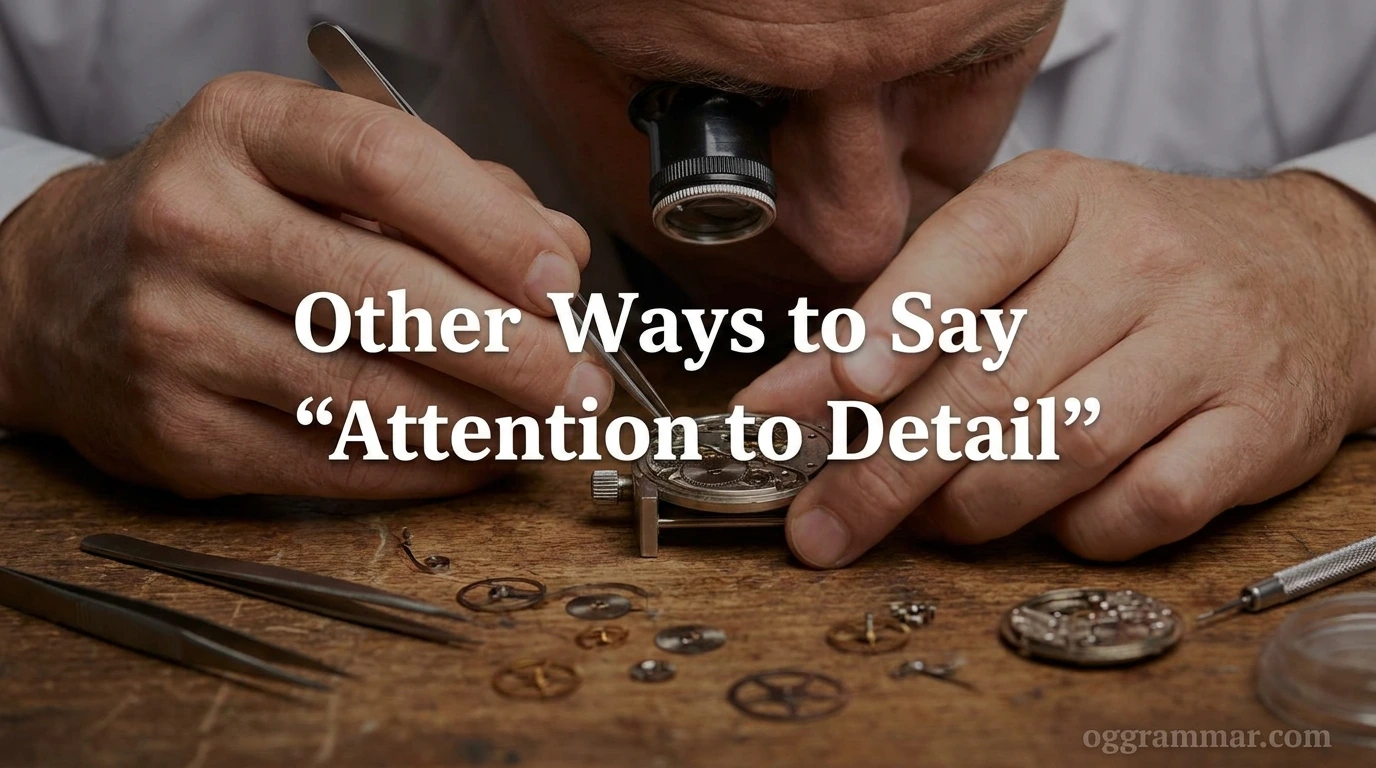
Some qualities are easy to admire but hard to describe well.
“Attention to detail” is one of those phrases. It is clear, professional, and widely understood, which is why it appears so often in resumes, performance reviews, interviews, and job descriptions. But after using it a few times, it can start to feel repetitive or too generic. That is usually when people look for other ways to say it — not because the phrase is wrong, but because they want wording that sounds sharper, more specific, and more natural in the moment.
That is where strong communication skills matter. An articulate speaker knows that the way you describe a strength can shape how seriously people take it. An expressive communicator understands that a phrase can sound polished in a formal setting, warm in a recommendation, or powerful in a resume depending on the wording. Whether you are improving eloquent writing, building verbal intelligence, strengthening storytelling skills, or practicing communication mastery, being able to vary how you describe attention to detail gives you more control.
People who are good with words often notice this instinctively. They know that not every skill should be described with the same phrase every time. Sometimes you want to sound professional. Sometimes you want to sound warm and human, Sometimes you want to sound precise and analytical. The right wording helps you do that.
In this guide, you will find the best other ways to say “attention to detail” along with meanings, tone notes, best-use cases, example sentences, emotional and professional impact, and real-life usage context. You will also learn how to choose the right phrase for resumes, interviews, recommendations, writing, and everyday conversation.
What “Attention to Detail” Really Means
The core meaning
“Attention to detail” means being careful, precise, and observant enough to notice small things that matter.
It can refer to someone who:
- catches mistakes
- notices patterns
- checks work carefully
- follows instructions closely
- values accuracy and quality
- spots things others may miss
Why people search for alternatives
People often want other ways to say it because:
- the phrase appears in almost every resume
- it can sound too broad or overused
- different roles call for different wording
- some situations need a more polished or more specific description
- communication mastery includes choosing the right nuance
Why wording matters
A persuasive communicator knows that one phrase can sound average while another sounds impressive and specific. Saying someone has “attention to detail” is good. Saying they are “meticulous,” “thorough,” or “highly observant” can be even more precise, depending on the context.
Did You Know?
Hiring managers often respond better to skill descriptions that are specific rather than generic. A sharper phrase can make a candidate sound more credible and memorable.
Quick Comparison Table of Alternatives
| Alternative Phrase | Tone | Meaning | Best Use Case |
| Detail-oriented | Professional | Focused on details | resumes, interviews, business writing |
| Meticulous | Formal | Extremely careful and exact | professional praise, formal writing |
| Thorough | Balanced | Complete and careful | reports, feedback, everyday use |
| Precise | Polished | Accurate and exact | technical, academic, professional settings |
| Observant | Thoughtful | Notices small things others may miss | personal strengths, reviews, conversation |
| Conscientious | Formal | Careful, responsible, and diligent | workplace, recommendations |
| Methodical | Professional | Organized and systematic | process-driven work, analysis |
| Diligent | Positive | Careful, persistent, hardworking | performance reviews, resumes |
| Careful | Simple | Avoids mistakes and handles tasks with care | general conversation, basic descriptions |
| Scrupulous | Very formal | Highly principled and exact | writing, formal praise |
| Exacting | Strong | Demanding high standards and precision | leadership, quality work |
| Eagle-eyed | Creative | Exceptionally good at noticing details | informal praise, storytelling |
| Analytical | Professional | Good at breaking things down logically | problem-solving, strategy |
| Fastidious | Formal | Extremely attentive and particular | formal writing, refined description |
| Quality-focused | Modern | Prioritizes strong standards and good results | business, branding, interviews |
| Perfectionist | Cautious | Strong drive for flawlessness | personal reflection, nuanced praise |
Best Other Ways to Say “Attention to Detail”
Detail-Oriented
Meaning
Someone who naturally pays close attention to details.
Tone
Professional, polished, and widely recognized.
Best Use Case
Resumes, interviews, recommendations, business writing.
Example Sentence
“She is detail-oriented and consistently catches small errors before they become bigger problems.”
Detailed Explanation
This is one of the strongest and most common alternatives because it is clear, direct, and easy to understand. It is especially useful when describing workplace strengths.
Emotional or Professional Impact
It sounds reliable, capable, and competent.
Real-Life Context
Used in job applications, performance reviews, and professional bios.
Meticulous
Meaning
Extremely careful and precise, often to a very high standard.
Tone
Formal, elegant, and highly positive.
Best Use Case
Professional praise, formal writing, technical work.
Example Sentence
“He is meticulous in his editing and never misses a small inconsistency.”
Detailed Explanation
This word suggests a high level of care and precision. It often implies that the person works with great discipline and accuracy.
Emotional or Professional Impact
It creates a strong impression of excellence and seriousness.
Real-Life Context
Used in evaluations, recommendations, and formal descriptions of skill.
Thorough
Meaning
Complete, careful, and well-checked.
Tone
Balanced and professional.
Best Use Case
Reports, reviews, interviews, general praise.
Example Sentence
“She gave a thorough review of the contract before signing it.”
Detailed Explanation
This is a versatile word that works in many settings. It suggests both completeness and care without sounding overly fancy.
Emotional or Professional Impact
It feels dependable and solid.
Real-Life Context
Used in business, education, and everyday communication.
Precise
Meaning
Accurate and exact.
Tone
Clean, polished, and professional.
Best Use Case
Technical roles, academic work, analytical communication.
Example Sentence
“His precise calculations helped the team avoid costly errors.”
Detailed Explanation
This phrase works best when accuracy matters more than general care. It is especially useful in fields where exactness is important.
Emotional or Professional Impact
It sounds sharp, intelligent, and trustworthy.
Real-Life Context
Used in science, data, design, finance, and formal writing.
Observant
Meaning
Quick to notice small details or changes.
Tone
Thoughtful and positive.
Best Use Case
Personal strengths, evaluations, creative descriptions.
Example Sentence
“She is highly observant and quickly notices when something is out of place.”
Detailed Explanation
This word highlights awareness and awareness of subtle differences. It is a great choice when the ability to notice matters as much as the ability to check.
Emotional or Professional Impact
It feels perceptive and attentive.
Real-Life Context
Used in character descriptions, team feedback, and interviews.
Conscientious
Meaning
Careful, responsible, and committed to doing things well.
Tone
Formal and respectful.
Best Use Case
Workplace praise, recommendations, character references.
Example Sentence
“He is a conscientious employee who takes every task seriously.”
Detailed Explanation
This phrase goes beyond simple detail-checking. It suggests a person who cares deeply about doing the job properly.
Emotional or Professional Impact
It sounds trustworthy and principled.
Real-Life Context
Used in performance reviews, references, and professional descriptions.
Methodical
Meaning
Done in a careful, organized, step-by-step way.
Tone
Professional and structured.
Best Use Case
Problem-solving, project work, analytical roles.
Example Sentence
“She takes a methodical approach to troubleshooting issues.”
Detailed Explanation
This word is especially useful when describing someone who works in a structured, systematic manner rather than just someone who checks details.
Emotional or Professional Impact
It sounds controlled, logical, and efficient.
Real-Life Context
Used in operations, research, planning, and workflow descriptions.
Diligent
Meaning
Hardworking, careful, and persistent.
Tone
Positive and professional.
Best Use Case
Resumes, reviews, recommendations, academic settings.
Example Sentence
“He is diligent in reviewing every file before submission.”
Detailed Explanation
This word combines effort with care. It is not only about noticing details; it is also about consistently applying effort to get things right.
Emotional or Professional Impact
It feels motivated and dependable.
Real-Life Context
Used in school, work, and formal praise.
Careful
Meaning
Avoiding mistakes and handling things with attention.
Tone
Simple, clear, and universal.
Best Use Case
General conversation, simple descriptions, practical communication.
Example Sentence
“She is careful when handling sensitive information.”
Detailed Explanation
This is the most straightforward alternative. It may not sound as impressive as some of the others, but it is easy to understand and works in almost any context.
Emotional or Professional Impact
It sounds safe, steady, and reliable.
Real-Life Context
Used in daily conversation, basic feedback, and informal praise.
Scrupulous
Meaning
Extremely careful, exact, and morally conscientious.
Tone
Very formal and refined.
Best Use Case
Formal writing, legal or ethical contexts, polished language.
Example Sentence
“He is scrupulous about accuracy in all of his reports.”
Detailed Explanation
This is a strong word with a more elevated tone. It suggests a person who pays close attention and takes standards seriously.
Emotional or Professional Impact
It sounds strict, principled, and highly exacting.
Real-Life Context
Used in formal essays, reviews, and sophisticated writing.
Exacting
Meaning
Demanding high standards and paying close attention to quality and correctness.
Tone
Strong and formal.
Best Use Case
Leadership, quality standards, performance descriptions.
Example Sentence
“She has an exacting eye for quality and expects strong results.”
Detailed Explanation
This word can describe someone who notices details and also expects a lot from the work. It can be positive, but it sometimes carries a serious or intense edge.
Emotional or Professional Impact
It sounds rigorous and uncompromising.
Real-Life Context
Used in management, craftsmanship, and high-standard environments.
Eagle-Eyed
Meaning
Very good at spotting small details.
Tone
Creative, vivid, and informal.
Best Use Case
Casual praise, storytelling, light descriptions.
Example Sentence
“He has an eagle-eyed ability to spot errors instantly.”
Detailed Explanation
This phrase is more colorful than most formal options. It is excellent when you want a descriptive and memorable expression rather than a standard résumé phrase.
Emotional or Professional Impact
It sounds vivid, playful, and sharp.
Real-Life Context
Used in articles, conversation, and informal praise.
Analytical
Meaning
Able to examine information carefully and logically.
Tone
Professional and intelligent.
Best Use Case
Problem-solving, strategy, research, technical roles.
Example Sentence
“Her analytical mindset helps her spot small issues before they grow.”
Detailed Explanation
This phrase is useful when detail is connected to reasoning, pattern recognition, or structured thinking. It is especially strong in business and academic contexts.
Emotional or Professional Impact
It sounds smart, strategic, and composed.
Real-Life Context
Used in resumes, professional profiles, and discussions of problem-solving skills.
Fastidious
Meaning
Very attentive to detail, sometimes to the point of being particular or exacting.
Tone
Formal and slightly old-fashioned.
Best Use Case
Formal writing, character descriptions, refined praise.
Example Sentence
“She is fastidious about formatting and presentation.”
Detailed Explanation
This word has a somewhat elevated and classic feel. It can be positive, but it may also imply that someone is very particular.
Emotional or Professional Impact
It sounds highly exact and disciplined.
Real-Life Context
Used in essays, profiles, and descriptive writing.
Quality-Focused
Meaning
Focused on high standards and good outcomes.
Tone
Modern and professional.
Best Use Case
Business language, branding, interviews, team communication.
Example Sentence
“He is quality-focused and always checks that the final result is strong.”
Detailed Explanation
This is a modern phrase that works especially well in workplaces where attention to detail is connected to standards and outcomes.
Emotional or Professional Impact
It sounds practical, modern, and dependable.
Real-Life Context
Used in business, leadership, and professional bios.
Perfectionist
Meaning
Someone who wants things to be flawless or extremely close to it.
Tone
Nuanced and sometimes cautious.
Best Use Case
Personal reflection, careful praise, character description.
Example Sentence
“She is such a perfectionist that she checks every detail three times.”
Detailed Explanation
This word can be positive or negative depending on context. It suggests high standards, but it can also imply stress, overchecking, or difficulty letting things go.
Emotional or Professional Impact
It can sound intense, exacting, or self-aware.
Real-Life Context
Used in personal descriptions, reflective writing, and nuanced conversation.
Formal vs casual alternatives
Formal alternatives
Use these when you want to sound polished and professional:
- detail-oriented
- meticulous
- conscientious
- methodical
- analytical
Casual alternatives
Use these when you want to sound more natural and conversational:
- careful
- observant
- eagle-eyed
- thorough
- quality-focused
Why tone matters
An articulate speaker knows that not every strength should be described in the same way. Communication mastery means choosing the phrase that fits the audience, the role, and the kind of impression you want to make.
How to choose the right phrase based on context
For resumes and interviews
Use:
- detail-oriented
- meticulous
- diligent
- conscientious
- analytical
For performance reviews
Use:
- thorough
- conscientious
- methodical
- precise
- diligent
For casual praise
Use:
- careful
- observant
- eagle-eyed
- thorough
- quality-focused
For formal writing
Use:
- scrupulous
- exacting
- meticulous
- conscientious
- precise
Mini communication tip
An expressive communicator does not choose the most impressive-sounding word. They choose the one that most accurately matches the behavior they are describing.
Why communication skills matter when describing strengths
“Attention to detail” is more than a skill label. It is often a sign of reliability, care, and professionalism.
People notice whether you sound:
- clear
- precise
- thoughtful
- professional
- specific
- credible
That is why people who are good with words often sound more persuasive. They know how to describe the same strength in a way that feels fresh and accurate.
Common mistakes when using these alternatives
Choosing a word that is too strong
Calling someone “fastidious” or “exacting” may sound too intense if you simply mean careful.
Choosing a word that is too weak
“Nice” or “good” may not fully capture strong attention to detail.
Ignoring tone
A word like “meticulous” sounds positive in a professional setting, but “perfectionist” can sound mixed or cautionary.
Repeating the same phrase too often
A little variation makes your language feel more natural and polished.
Words to avoid in professional settings
Avoid wording that sounds vague or careless:
- “obsessed with tiny stuff”
- “nitpicky” unless you mean it negatively
- “picky” when you want to sound respectful
- “super careful” in very formal writing
- “perfection freak” in professional settings
These may sound casual or even disrespectful depending on the context.
Better professional choices
Use:
- detail-oriented
- meticulous
- thorough
- conscientious
- precise
The psychology behind influential language
The way you describe a skill shapes how seriously people take it.
A charismatic speaker understands that:
- precise words build trust
- polished words create professionalism
- vivid words create memorability
- balanced words sound credible
That is why persuasive language matters. It helps the listener or reader see the quality behind the skill, not just the label.
Did you know?
Specific praise is often more memorable than generic praise. “Meticulous in their process” can sound more credible than simply “good with details.”
Practical tips to improve verbal communication skills
Be specific
Instead of saying someone is just “good,” identify what exactly they do well.
Match tone to audience
Use formal wording in resumes and interviews, and more colorful wording in stories or casual conversation.
Keep it natural
The best phrase sounds like it belongs in the sentence, not like a forced synonym.
Practice variation
Try rephrasing the same strength in several ways:
- formal
- casual
- creative
- professional
Observe strong communicators
Public speaking, eloquent writing, and everyday conversation all improve when you notice how skilled speakers describe strengths with precision.
Scenario-based examples
In a résumé
Instead of: “Has attention to detail.”
Try: “Detail-oriented professional with strong accuracy in fast-paced environments.”
Why it works: It sounds more specific and career-ready.
In a recommendation letter
Instead of: “She has attention to detail.”
Try: “She is meticulous in her work and consistently delivers polished results.”
Why it works: It sounds stronger and more formal.
In casual praise
Instead of: “He has attention to detail.”
Try: “He’s really eagle-eyed — he catches everything.”
Why it works: It sounds friendly and vivid.
In a performance review
Instead of: “Shows attention to detail.”
Try: “Demonstrates a thorough and conscientious approach to every task.”
Why it works: It sounds professional and thoughtful.
Practical phrases readers can use immediately
Formal
- detail-oriented
- meticulous
- conscientious
- methodical
- precise
Professional
- thorough
- analytical
- quality-focused
- diligent
- scrupulous
Casual
- careful
- observant
- eagle-eyed
- thorough
Nuanced
- exacting
- perfectionist
- fastidious
FAQs
What is a professional way to say “attention to detail”?
Professional alternatives include:
- detail-oriented
- meticulous
- conscientious
- methodical
- precise
What is a more impressive-sounding alternative?
“Meticulous,” “scrupulous,” and “exacting” sound especially polished, though they should be used carefully.
What is the best casual alternative?
“Careful,” “observant,” and “eagle-eyed” are strong casual alternatives.
How do I describe attention to detail on a résumé?
Use:
- detail-oriented
- meticulous
- analytical
- conscientious
- thorough
Is “perfectionist” a good alternative?
It can be, but it is nuanced and can sound positive or negative depending on the context.
How can I sound more articulate when describing strengths?
Use wording that is specific, accurate, and appropriate for the audience.
What is the difference between “thorough” and “meticulous”?
“Thorough” means complete and careful, while “meticulous” suggests an even higher level of precision and care.
Why does tone matter so much?
Because tone affects whether your description sounds casual, formal, creative, or professional.
How can I improve communication mastery?
Practice rephrasing common skill descriptions and observe how effective communicators choose precise words.
Can better wording make me sound more professional?
Absolutely. Thoughtful phrasing can make a skill sound stronger, clearer, and more credible.
Conclusion
Learning other ways to say attention to detail helps your communication sound more precise, more polished, and more adaptable in different settings. Whether you choose detail-oriented, meticulous, thorough, conscientious, eagle-eyed, or quality-focused, the right phrase can make your message feel more accurate and memorable.
An articulate speaker understands that the way a strength is described can change how it is perceived. An expressive communicator knows how to choose wording that fits a résumé, a recommendation, a conversation, or a performance review. And someone with strong communication mastery knows that the best words are not just correct — they are the ones that fit the context, the audience, and the purpose.
The more intentionally you choose your words, the more confident, clear, and memorable your communication becomes.
