
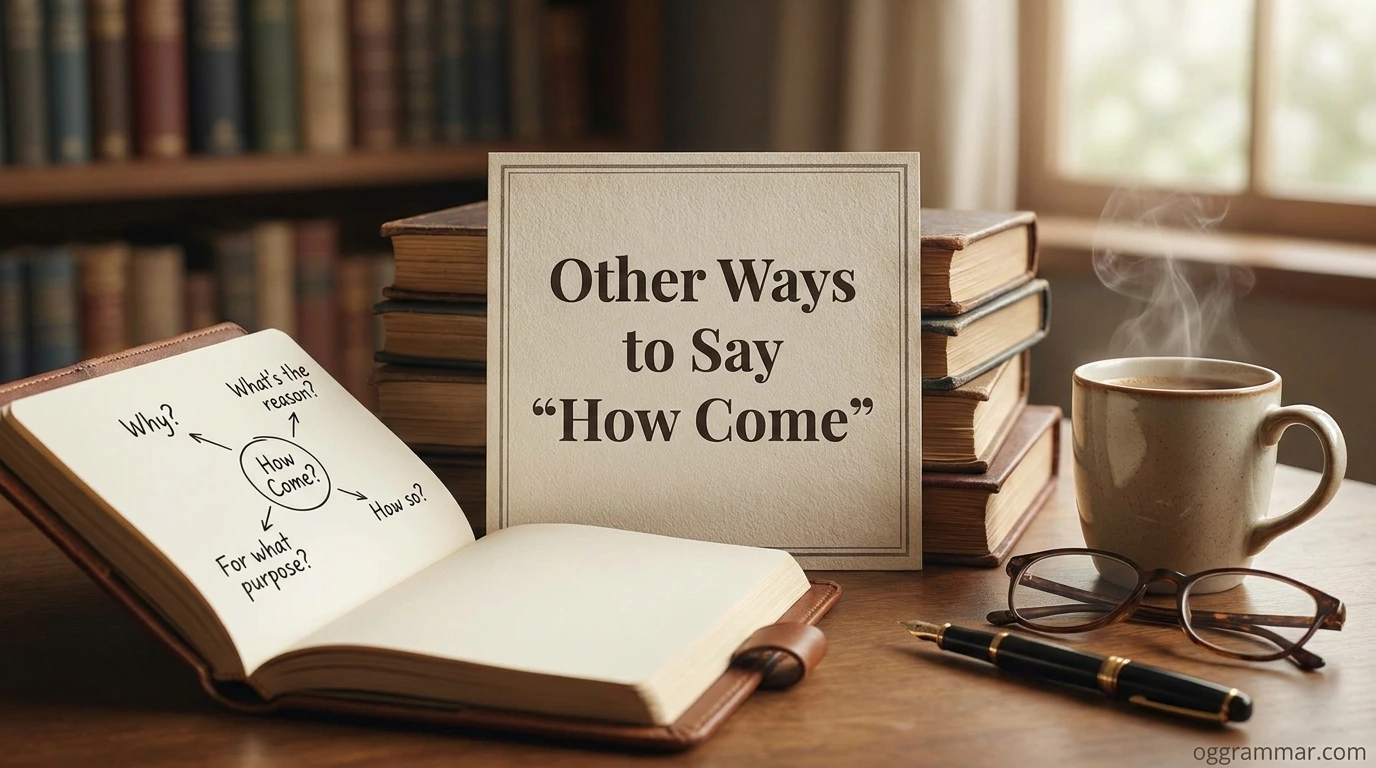
Sometimes a tiny phrase carries a lot of personality.
“How come” is one of those expressions. It is casual, curious, and very natural in conversation, which is why people use it so often. But after repeating it enough times, it can start to feel a little too familiar. That is usually when people begin searching for other ways to say it — not because it is wrong, but because they want a version that sounds smoother, more precise, or better suited to the situation.
That is where strong communication skills matter. An articulate speaker knows that even a simple question can shape the tone of the whole conversation. An expressive communicator understands that asking about a reason can sound casual, polite, formal, thoughtful, or even gently challenging depending on the wording. Whether you are improving eloquent writing, strengthening verbal intelligence, sharpening storytelling skills, or building communication mastery, having alternatives to “how come” gives you more control over your language.
People who are good with words often notice this instinctively. They know that the way you ask a question affects the way people answer it. A soft question invites explanation. A direct question invites clarity. A polished question can sound more professional. A conversational question can feel warmer and more human. That is the real power of linguistic ability: not just knowing vocabulary, but knowing how to use it.
In this guide, you will find the best other ways to say “how come”, along with tone notes, meanings, best-use cases, example sentences, emotional and professional impact, and real-life usage context. You will also learn how to choose the right phrase for the setting, common mistakes to avoid, and how subtle wording can make your communication feel more confident and natural.
What Does “How Come” Mean?
The core meaning
“How come” is an informal way to ask why something happened or why something is the way it is.
It can mean:
- Why did that happen?
- Why is that true?
- What caused that?
- What’s the reason?
- How did that come about?
For example:
- “How come you didn’t come?” means “Why didn’t you come?”
- “How come it works like that?” means “Why does it work like that?”
Why people search for alternatives
People often want alternatives because:
- “how come” can sound too casual for formal settings
- some questions need more precision
- different situations call for different tones
- stronger wording can sound more polished
- communication mastery includes asking better questions, not just answering them
Why wording matters
A persuasive communicator knows that the phrase used before a question can change how it feels. “How come?” sounds friendly and natural, but “What caused that?” sounds more analytical, and “Could you explain why?” sounds more polished and professional. That is why alternatives matter.
Did you know?
People often judge a speaker’s tone before they judge the actual question. A simple shift in phrasing can make a question feel less defensive, more curious, or more respectful.
Why communication skills matter when asking “why”
A good question is not just about curiosity. It is about tone, timing, and purpose.
An articulate speaker understands that questions can:
- invite clarity
- signal concern
- show interest
- express skepticism
- maintain professionalism
- keep the conversation moving
That matters because people who are good with words do not ask the same way in every setting. They adapt. In a casual chat, “how come?” may be perfect. In a meeting, it may be better to ask, “Could you explain why?” In a report, “What led to this?” may be more useful.
Quick comparison table of alternatives
| Alternative Phrase | Tone | Meaning | Best Use Case |
| Why | Direct | The reason for something | everyday conversation, formal use |
| What’s the reason | Neutral | The reason or cause | polite, simple conversations |
| What caused that | Analytical | The cause of an event | problem-solving, discussion |
| What made you | Curious | The motivation behind a choice | casual conversations |
| What led to that | Thoughtful | The sequence of events behind something | storytelling, explanation |
| Could you explain why | Polite | Asking for a reason with respect | professional communication |
| I’m curious why | Warm | Gentle curiosity | friendly conversation |
| What’s behind that | Informal-thoughtful | The deeper reason | casual and reflective settings |
| For what reason | Formal | A precise reason | formal writing and speech |
| How did that happen | Natural | Asking how something occurred | casual explanation, surprise |
| What prompted that | Polite | What triggered a choice or action | interviews, thoughtful conversation |
| Why do you ask | Curious-defensive | Asking about the other person’s reason | back-and-forth conversation |
| How did that come about | Reflective | Asking about the origin of something | narratives, discussions |
| What brought that on | Conversational | Asking what triggered something | emotional or casual exchange |
| What’s driving that | Thoughtful | Asking about the motivation behind something | coaching, workplace, discussion |
Best other ways to say “how come”
Why
Meaning
A direct way to ask for the reason behind something.
Tone
Neutral, simple, and very flexible.
Best Use Case
Everyday conversation, professional settings, and written communication.
Example Sentence
“Why did you change the schedule?”
Detailed Explanation
This is the most universal alternative to “how come.” It is shorter, clearer, and works in almost every context. If you want a direct question without sounding too casual, “why” is often the best choice.
Emotional or Professional Impact
It sounds clear, efficient, and straightforward.
Real-Life Usage Context
Used in conversation, business, school, and everyday questions.
What’s the Reason
Meaning
You are asking for the reason behind an action, event, or choice.
Tone
Neutral and polite.
Best Use Case
Professional communication, polite conversations, customer service.
Example Sentence
“What’s the reason for the delay?”
Detailed Explanation
This phrase is useful when you want to sound a little more measured than “how come.” It feels respectful and does not sound too abrupt.
Emotional or Professional Impact
It creates a calm and controlled impression.
Real-Life Usage Context
Common in meetings, emails, and discussions.
What Caused That
Meaning
You are asking about the cause of something.
Tone
Analytical and practical.
Best Use Case
Problem-solving, troubleshooting, discussions about outcomes.
Example Sentence
“What caused that error in the report?”
Detailed Explanation
This phrase works especially well when the issue is about a result, mistake, or event. It sounds more analytical than casual.
Emotional or Professional Impact
It sounds thoughtful and focused.
Real-Life Usage Context
Used in technical, business, or investigative settings.
What Made You
Meaning
You are asking about the motivation, influence, or reason behind someone’s choice.
Tone
Curious and conversational.
Best Use Case
Casual conversations, interviews, personal discussions.
Example Sentence
“What made you choose that career path?”
Detailed Explanation
This phrase is especially useful when you want to understand someone’s decision-making. It is more personal than a simple “why.”
Emotional or Professional Impact
It feels interested and human.
Real-Life Usage Context
Used in interviews, friendly conversations, and reflective discussions.
What Led to That
Meaning
You are asking about the sequence of events that resulted in something.
Tone
Thoughtful and clear.
Best Use Case
Explanations, storytelling, discussions about outcomes.
Example Sentence
“What led to that decision?”
Detailed Explanation
This phrase suggests a process rather than a single cause. It works well when the answer may involve several steps or events.
Emotional or Professional Impact
It sounds intelligent and measured.
Real-Life Usage Context
Used in analysis, interviews, and narrative explanations.
Could You Explain Why
Meaning
You are politely requesting an explanation.
Tone
Respectful and professional.
Best Use Case
Workplace communication, formal discussions, sensitive conversations.
Example Sentence
“Could you explain why the timeline changed?”
Detailed Explanation
This is one of the best alternatives when you want to sound courteous and calm. It is especially useful in professional settings where tone matters.
Emotional or Professional Impact
It sounds polished, respectful, and mature.
Real-Life Usage Context
Used in meetings, emails, and professional dialogue.
I’m Curious Why
Meaning
You are expressing interest in the reason behind something.
Tone
Warm and conversational.
Best Use Case
Friendly conversations, informal discussions.
Example Sentence
“I’m curious why you decided to take that route.”
Detailed Explanation
This phrase softens the question and makes it feel more open. It is ideal when you want to sound genuinely interested rather than interrogative.
Emotional or Professional Impact
It sounds approachable and thoughtful.
Real-Life Usage Context
Used in casual chats, networking, and supportive discussions.
What’s Behind That
Meaning
You are asking about the deeper reason or motivation.
Tone
Informal and thoughtful.
Best Use Case
Casual conversations, reflective dialogue.
Example Sentence
“What’s behind that decision?”
Detailed Explanation
This phrase can feel more natural and intuitive than “why” when you want to ask about a deeper reason without sounding too formal.
Emotional or Professional Impact
It feels curious and engaged.
Real-Life Usage Context
Used in casual problem-solving and personal discussion.
For What Reason
Meaning
A formal way to ask why something happened.
Tone
Formal and direct.
Best Use Case
Writing, formal speech, structured questioning.
Example Sentence
“For what reason was the meeting postponed?”
Detailed Explanation
This phrase sounds more formal than “how come” and more structured than plain “why.” It is useful in professional or written communication.
Emotional or Professional Impact
It sounds precise and detached.
Real-Life Usage Context
Used in official writing, formal questions, and structured communication.
How Did That Happen
Meaning
You are asking for an explanation of the event or outcome.
Tone
Natural and conversational.
Best Use Case
Casual conversation, surprising situations, storytelling.
Example Sentence
“How did that happen so quickly?”
Detailed Explanation
This phrase is very useful when you are asking about the process or chain of events, not just the reason.
Emotional or Professional Impact
It sounds curious and open.
Real-Life Usage Context
Used in everyday conversation and storytelling.
What Prompted That
Meaning
You are asking what triggered a thought, action, or decision.
Tone
Polite and thoughtful.
Best Use Case
Interviews, discussions, professional conversations.
Example Sentence
“What prompted that change in direction?”
Detailed Explanation
This phrase is especially useful because it sounds intelligent and precise. It works well when you want to understand the moment or influence that caused something to happen.
Emotional or Professional Impact
It sounds professional, observant, and respectful.
Real-Life Usage Context
Used in interviews, coaching, and strategic discussions.
Why Do You Ask
Meaning
You are asking about the other person’s reason for asking the question.
Tone
Curious and slightly defensive depending on delivery.
Best Use Case
Back-and-forth conversation, boundary-setting, follow-up questions.
Example Sentence
“Why do you ask? I might be able to give you a better answer if I know the context.”
Detailed Explanation
This phrase is useful when you want to understand the purpose behind the question before answering it. It can sound friendly or careful depending on tone.
Emotional or Professional Impact
It can sound open or guarded depending on delivery.
Real-Life Usage Context
Used in everyday conversation and sensitive follow-ups.
How Did That Come About
Meaning
You are asking how something originated or developed.
Tone
Reflective and narrative.
Best Use Case
Storytelling, origins, background explanations.
Example Sentence
“How did that come about in the first place?”
Detailed Explanation
This phrase works well when you want to understand the background story, not just the immediate reason.
Emotional or Professional Impact
It sounds thoughtful and curious.
Real-Life Usage Context
Used in interviews, storytelling, and conversations about origins.
What Brought That On
Meaning
You are asking what triggered a reaction, feeling, or change.
Tone
Conversational and slightly informal.
Best Use Case
Emotional conversations, casual dialogue.
Example Sentence
“What brought that on? You seem a little different today.”
Detailed Explanation
This phrase is especially useful when the reason is emotional or sudden. It is more personal than a plain “why.”
Emotional or Professional Impact
It sounds warm, observant, and human.
Real-Life Usage Context
Used in close conversations and emotional check-ins.
What’s Driving That
Meaning
You are asking about the motivation or force behind something.
Tone
Thoughtful and slightly analytical.
Best Use Case
Coaching, workplace conversations, reflective discussion.
Example Sentence
“What’s driving that decision on your side?”
Detailed Explanation
This phrase is useful when you want to understand motivation in a deeper, more strategic way.
Emotional or Professional Impact
It sounds intelligent and balanced.
Real-Life Usage Context
Used in business, coaching, and discussion.
Formal vs casual alternatives
Formal alternatives
Use these when you want to sound polished and professional:
- Could you explain why
- For what reason
- What prompted that
- What led to that
Casual alternatives
Use these when you want to sound more natural and conversational:
- Why
- What made you
- What’s behind that
- What brought that on
Why tone matters
An articulate speaker knows that the same question can sound curious, polite, direct, or reflective depending on the wording. Communication mastery is not just about meaning. It is about choosing the phrase that fits the audience and the moment.
How to choose the right phrase based on context
For workplace communication
Use:
- Could you explain why
- What’s the reason
- What prompted that
- What caused that
For friends and family
Use:
- What made you
- What’s behind that
- What brought that on
- How did that happen
For formal writing
Use:
- For what reason
- What led to that
- What caused that
- Could you explain why
For casual conversation
Use:
- Why
- I’m curious why
- What’s the latest
- What made you
Mini communication tip
An expressive communicator does not choose the most complicated phrase. They choose the phrase that best fits the relationship, tone, and purpose of the question.
Why communication skills matter in questions
A question is not just a request for information. It is a social signal.
People notice whether you sound:
- curious
- polite
- formal
- casual
- respectful
- defensive
- thoughtful
That is why people who are good with words often ask better questions. They know how to sound interested without sounding rude or repetitive.
Common mistakes when using alternatives to “how come”
Sounding too defensive
Some alternatives can sound confrontational if the tone is too sharp.
Using a formal phrase in a casual conversation
“For what reason” may feel too stiff in a relaxed chat.
Being too vague
A broad question may not give the other person enough guidance.
Asking in a way that feels interrogative
Sometimes the phrase matters less than the tone, so a soft delivery can help.
Words to avoid in professional settings
Avoid expressions that can sound too harsh or too casual:
- “Why are you even asking?”
- “What do you mean by that?”
- “Why on earth?”
- “What’s your problem?”
- “How come you’re even doing that?”
These can create tension unless your goal is direct confrontation.
Better professional choices
Use:
- Could you explain why
- What’s the reason
- What prompted that
- What led to that
The psychology behind influential language
The way you ask a question shapes how people answer.
A charismatic speaker understands that:
- soft questions invite openness
- direct questions can sound efficient
- thoughtful phrasing builds trust
- respectful wording reduces friction
That is why persuasive language matters. It can make a question feel open, curious, or professional before the other person even responds.
Did you know?
People are often more willing to explain themselves when a question sounds curious rather than critical. A small shift in wording can make a big difference in the quality of the answer.
Practical tips to improve verbal communication skills
Match the phrase to the situation
If you want a quick answer, be direct. If you want a fuller answer, choose a softer phrase.
Keep it natural
The best question sounds like something a real person would say, not a template.
Practice variation
Try rewriting the same “how come” question in several tones:
- formal
- casual
- polite
- curious
Observe strong communicators
Public speaking, eloquent writing, and daily conversation all improve when you notice how skilled speakers ask questions with ease.
Scenario-based examples
In a meeting
Instead of: “How come we missed the deadline?”
Try: “What caused the delay?”
Why it works: It sounds more professional and solution-oriented.
In a casual chat
Instead of: “How come you left early?”
Try: “What made you head out so soon?”
Why it works: It sounds more natural and friendly.
In an interview
Instead of: “How come you chose this field?”
Try: “What prompted you to choose this field?”
Why it works: It sounds polished and thoughtful.
In a difficult conversation
Instead of: “How come you said that?”
Try: “Could you explain why you said that?”
Why it works: It lowers tension and invites explanation.
Practical phrases readers can use immediately
Formal
- Could you explain why
- What prompted that
- What led to that
- For what reason
Casual
- Why
- What made you
- What’s behind that
- What brought that on
Professional
- What’s the reason
- What caused that
- What’s driving that
- Could you explain why
FAQs
What is a professional way to say “how come”?
Professional alternatives include:
- Could you explain why
- What’s the reason
- What prompted that
- What led to that
What is a casual alternative?
Casual alternatives include:
- Why
- What made you
- What’s behind that
- What brought that on
What phrase sounds the most polite?
“Could you explain why” and “I’m curious why” sound especially polite and respectful.
What should I use in a work email?
Use:
- What’s the reason
- Could you explain why
- What prompted that
- What led to that
Is “how come” too casual?
Not at all. It is perfectly normal in everyday conversation, but alternatives can make your language sound more polished.
How can I sound more articulate when asking questions?
Use wording that fits the context and avoid sounding repetitive or overly direct.
What is the difference between “what made you” and “what prompted that”?
“What made you” sounds more conversational, while “what prompted that” sounds more polished and professional.
Why does tone matter so much?
Because tone affects whether your question feels curious, respectful, defensive, or professional.
How can I improve communication mastery?
Practice rephrasing common questions in different ways and observe how effective communicators adjust tone.
Can better wording make me sound more confident?
Absolutely. Thoughtful phrasing can make your questions sound calmer, clearer, and more polished.
Conclusion
Learning other ways to say how come helps your communication sound more natural, more flexible, and more intentional in any setting. Whether you choose why, what made you, what prompted that, what led to that, or could you explain why, the right phrase can make your question feel more polished and more effective.
An articulate speaker understands that questions are not just about getting answers. They are about shaping the conversation. An expressive communicator knows how to ask in a way that feels curious, respectful, or professional depending on the moment. And someone with strong communication mastery knows that the best words are the ones that fit the audience, the purpose, and the tone.
The more intentionally you choose your words, the more confident, clear, and memorable your communication becomes.
