
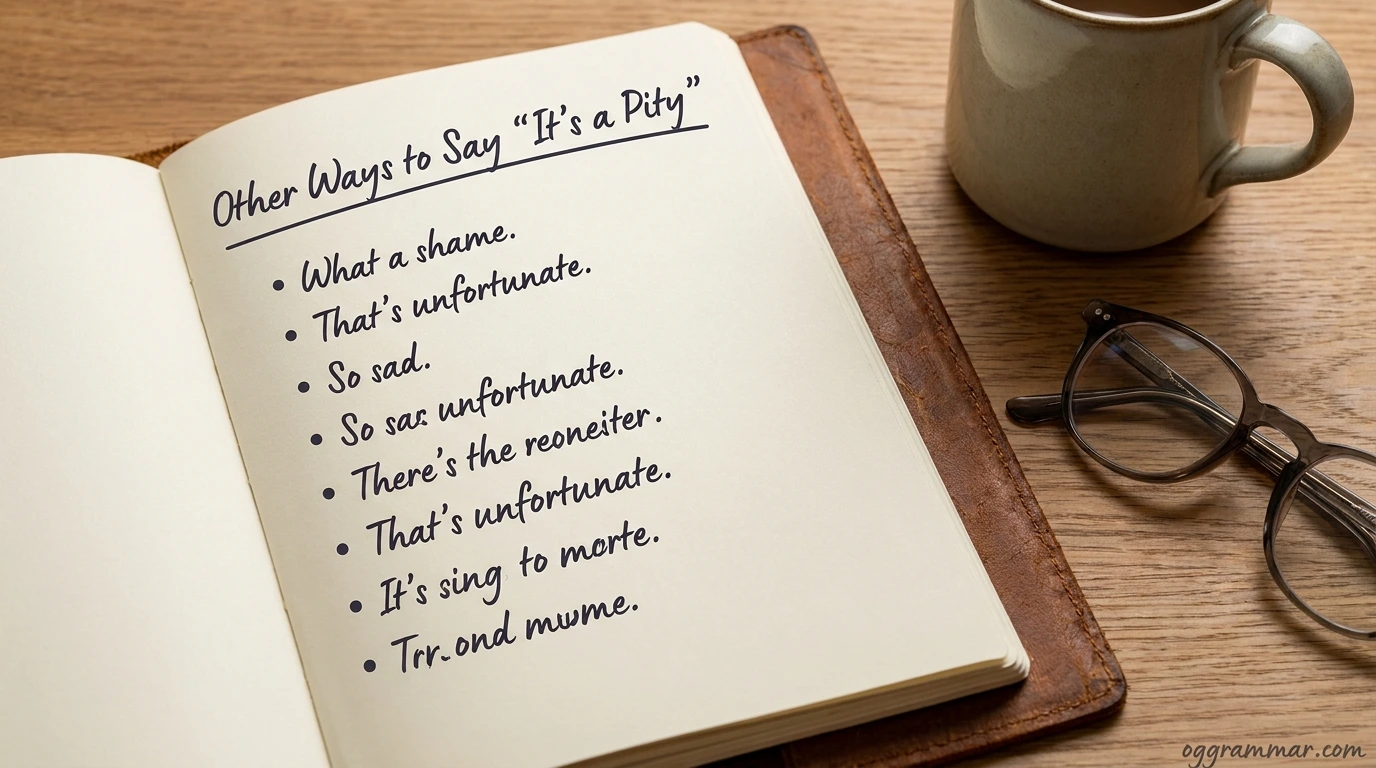
There are moments in conversation when a simple phrase carries a surprising amount of emotional weight.
Maybe a friend had to cancel a long-awaited trip. Maybe a colleague missed an opportunity by a narrow margin, Maybe someone shared disappointing news, and you wanted to respond with care, tact, and just the right amount of sympathy. In those moments, saying “it’s a pity” is perfectly understandable — but it may not always sound natural, modern, professional, or emotionally precise.
That is why people search for better ways to say it.
An articulate speaker knows that communication is not only about meaning. It is also about tone, timing, and emotional intelligence. A strong expressive communicator understands that the same sentiment can sound warm, formal, casual, or even a little old-fashioned depending on the words used. Whether you are improving eloquent writing, building verbal intelligence, refining public speaking, or developing communication mastery, having multiple ways to express regret or disappointment can make your language feel more natural and powerful.
Language shapes how people feel. A thoughtful phrase can soften disappointment, show empathy, or simply make your message sound more polished. A careless phrase can feel cold or awkward. That is why the right alternative to “it’s a pity” matters in professional emails, personal conversations, speeches, and everyday interactions.
In this guide, you will learn other ways to say it’s a pity in formal, casual, emotional, and creative contexts. You will also find comparison tables, example sentences, detailed explanations, communication tips, common mistakes, and practical advice for choosing the right phrase every time.
What Does “It’s a Pity” Mean?
The Core Meaning
The phrase “it’s a pity” is used to express:
- regret
- disappointment
- sympathy
- sadness about an unfortunate situation
It is often used when something did not turn out as hoped.
Common Uses
People may say “it’s a pity” when:
- plans fall through
- opportunities are lost
- something disappointing happens
- someone misses out on something meaningful
- the outcome is unfortunate
Why People Search for Alternatives
People search for other ways to say it because:
- the phrase can sound old-fashioned in some contexts
- different situations require different emotional tones
- professional communication often needs a more polished alternative
- casual conversation may benefit from a more natural expression
Did You Know?
Communication research shows that people often interpret tone before content. A phrase that sounds polite in one setting may feel distant or awkward in another. That is why alternative wording matters so much.
Why Communication Skills Matter When Expressing Disappointment
Being “good with words” is not about using fancy vocabulary for its own sake. It is about choosing language that matches the emotion of the situation.
An expressive communicator understands that saying “that’s unfortunate” sounds different from saying “what a shame.” An articulate speaker knows how to sound empathetic without sounding dramatic, and professional without sounding cold.
Good Communication Builds Trust
When someone receives disappointing news, the way you respond can influence:
- how understood they feel
- whether they trust you
- how respectful your message sounds
- how the relationship develops afterward
Emotional Precision Matters
Sometimes “it’s a pity” is enough. But sometimes you need a phrase that is:
- warmer
- more formal
- more empathetic
- more natural
- more professional
That is where communication mastery becomes important.
Expert Insight
Public speaking coaches often emphasize that emotionally accurate language is more effective than vague sympathy. The more specific your wording, the more human and thoughtful you sound.
Quick Comparison Table of Alternatives to “It’s a Pity”
| Alternative Phrase | Tone | Meaning | Best Use Case |
| That’s unfortunate | Neutral | Something disappointing happened | workplace communication |
| What a shame | Casual | Mild disappointment or sympathy | everyday conversation |
| That’s too bad | Conversational | Simple disappointment | informal use |
| How disappointing | Direct | Expressing clear disappointment | personal or professional situations |
| It’s regrettable | Formal | An outcome is unfortunate | business or formal writing |
| I’m sorry to hear that | Empathetic | Sympathy for bad news | emotional conversations |
| Such a shame | Warm | Stronger emotional disappointment | casual or heartfelt use |
| That’s a real letdown | Casual-emotional | Something failed expectations | personal conversations |
| A pity indeed | Slightly formal | Emphasis on regret | literary or reflective writing |
| That’s unfortunate timing | Practical | Bad timing caused the issue | scheduling and logistics |
| It’s a shame it worked out that way | Reflective | Regret about the result | thoughtful communication |
| That’s disappointing | Clear | Expressing direct disappointment | general use |
| It’s unfortunate that… | Polished | Formal expression of regret | reports and professional writing |
| A missed opportunity | Strategic | Something valuable was lost | business and reflective use |
| That’s a regrettable outcome | Formal | Negative result acknowledged respectfully | official communication |
Formal Alternatives to “It’s a Pity”
That’s Unfortunate
Meaning
A polite way to acknowledge that something bad or disappointing happened.
Tone
Neutral and professional.
Best Use Case
Workplace communication, emails, and business conversations.
Example Sentence
“That’s unfortunate, but we can still move forward with the plan.”
Detailed Explanation
This phrase is one of the safest and most versatile alternatives. It sounds respectful without being overly emotional or casual.
Emotional or Professional Impact
Creates calm, composed communication.
Real-Life Usage Context
Common in office conversations, client communication, and formal writing.
It’s Regrettable
Meaning
A more formal way to say something is unfortunate or disappointing.
Tone
Formal and polished.
Best Use Case
Business writing, official statements, and serious discussions.
Example Sentence
“It’s regrettable that the meeting had to be postponed.”
Detailed Explanation
This phrase sounds sophisticated and objective. It works well when the speaker wants to sound careful and professional.
Emotional or Professional Impact
Adds seriousness and credibility.
Real-Life Usage Context
Used in reports, corporate communication, and formal notices.
It’s Unfortunate That…
Meaning
A structured way to express regret about a specific situation.
Tone
Formal and clear.
Best Use Case
Professional emails, speeches, and written explanations.
Example Sentence
“It’s unfortunate that the project was delayed by technical issues.”
Detailed Explanation
This wording is especially useful when you want to connect regret directly to a reason or event.
Emotional or Professional Impact
Feels polished and thoughtful.
Real-Life Usage Context
Common in business, academia, and formal presentations.
A Regrettable Outcome
Meaning
A negative result that is acknowledged respectfully.
Tone
Formal and analytical.
Best Use Case
Reports, official communication, and professional summaries.
Example Sentence
“The delay was a regrettable outcome of the supply chain disruption.”
Detailed Explanation
This phrase is especially useful when describing results rather than emotions.
Emotional or Professional Impact
Makes the communication sound controlled and objective.
Real-Life Usage Context
Often found in executive summaries, policy documents, and reports.
Casual and Everyday Alternatives
What a Shame
Meaning
A common casual expression of mild regret or disappointment.
Tone
Warm and natural.
Best Use Case
Friends, family, and everyday conversation.
Example Sentence
“What a shame you couldn’t make it to the concert.”
Detailed Explanation
This is one of the most natural alternatives. It feels conversational and emotionally accessible.
Emotional or Professional Impact
Creates a friendly and sympathetic tone.
Real-Life Usage Context
Frequently used in personal conversations and informal messages.
That’s Too Bad
Meaning
A simple expression of disappointment.
Tone
Casual and easygoing.
Best Use Case
Informal conversation and light sympathy.
Example Sentence
“That’s too bad you had to miss the trip.”
Detailed Explanation
This phrase is straightforward and widely used. It is not overly emotional, which makes it useful in everyday communication.
Emotional or Professional Impact
Feels natural and uncomplicated.
Real-Life Usage Context
Common among friends, coworkers, and family members.
Such a Shame
Meaning
A stronger or more emotional version of “what a shame.”
Tone
Warm and expressive.
Best Use Case
Casual conversations and heartfelt disappointment.
Example Sentence
“It’s such a shame the event was canceled.”
Detailed Explanation
This phrase feels more emotionally loaded than “that’s too bad” and can sound more sincere.
Emotional or Professional Impact
Creates empathy and deeper emotional tone.
Real-Life Usage Context
Used in conversations, messages, and reflective writing.
That’s a Real Letdown
Meaning
Something failed to meet expectations.
Tone
Casual-emotional.
Best Use Case
Personal conversations and informal reflection.
Example Sentence
“That was a real letdown after all the planning.”
Detailed Explanation
This phrase adds a bit more emotional intensity and is useful when disappointment feels stronger.
Emotional or Professional Impact
Sounds honest and relatable.
Real-Life Usage Context
Common in informal discussions and reviews.
Empathetic Alternatives
I’m Sorry to Hear That
Meaning
A compassionate response to bad news.
Tone
Empathetic and supportive.
Best Use Case
Emotional conversations and sensitive communication.
Example Sentence
“I’m sorry to hear that your travel plans were canceled.”
Detailed Explanation
This phrase is excellent when the goal is to show care rather than simply comment on the situation.
Emotional or Professional Impact
Creates emotional safety and support.
Real-Life Usage Context
Used in personal messages, customer service, and difficult conversations.
That’s Disappointing
Meaning
A direct and honest expression of disappointment.
Tone
Clear and balanced.
Best Use Case
General use in both personal and professional contexts.
Example Sentence
“That’s disappointing, but we’ll find another way forward.”
Detailed Explanation
This phrase is concise and emotionally honest without sounding too dramatic.
Emotional or Professional Impact
Sounds sincere and grounded.
Real-Life Usage Context
Works well in feedback, conversation, and workplace communication.
How Disappointing
Meaning
A strong expression of regret or dissatisfaction.
Tone
Emphatic and expressive.
Best Use Case
Personal reactions and reflective communication.
Example Sentence
“How disappointing that the opportunity didn’t go through.”
Detailed Explanation
This phrase feels more emotional than “that’s disappointing” and may be useful when the speaker wants to sound more expressive.
Emotional or Professional Impact
Creates stronger emotional resonance.
Real-Life Usage Context
Often used in conversation, writing, and reaction-based communication.
Creative and Reflective Alternatives
A Missed Opportunity
Meaning
Something valuable was lost or not fully realized.
Tone
Reflective and strategic.
Best Use Case
Business, leadership, and reflective writing.
Example Sentence
“It was a missed opportunity to collaborate with such a talented team.”
Detailed Explanation
This phrase goes beyond disappointment and highlights the value of what was lost.
Emotional or Professional Impact
Sounds thoughtful and insightful.
Real-Life Usage Context
Used in professional analysis, leadership talks, and evaluations.
It’s a Shame It Worked Out That Way
Meaning
A thoughtful acknowledgment of an unfavorable result.
Tone
Warm and reflective.
Best Use Case
Personal or conversational communication.
Example Sentence
“It’s a shame it worked out that way after all your effort.”
Detailed Explanation
This phrase sounds less abrupt and more emotionally aware than a shorter alternative.
Emotional or Professional Impact
Feels compassionate and human.
Real-Life Usage Context
Common in conversations, letters, and storytelling.
A Pity Indeed
Meaning
A slightly elevated way of expressing regret.
Tone
Formal, reflective, and literary.
Best Use Case
Writing, speeches, and thoughtful commentary.
Example Sentence
“A pity indeed, considering how much potential the project had.”
Detailed Explanation
This phrase is not as common in everyday speech, but it can sound refined in writing.
Emotional or Professional Impact
Creates a thoughtful and somewhat elegant tone.
Real-Life Usage Context
Used in essays, articles, and speeches.
How to Choose the Right Phrase
Different situations require different tones.
For Professional Settings
Use:
- That’s unfortunate
- It’s regrettable
- It’s unfortunate that…
- A regrettable outcome
For Casual Conversations
Use:
- What a shame
- That’s too bad
- Such a shame
- That’s a real letdown
For Emotional Support
Use:
- I’m sorry to hear that
- It’s a shame it worked out that way
- That’s disappointing
For Reflective or Strategic Communication
Use:
- A missed opportunity
- A regrettable outcome
- It’s unfortunate that…
Mini Communication Tip
An articulate speaker does not choose the phrase that sounds most dramatic. They choose the one that fits the emotional weight of the moment.
Formal vs Casual Expressions
Formal Alternatives
Phrases are ideal when you want to sound:
- polished
- respectful
- objective
- professional
Examples:
- It’s regrettable
- It’s unfortunate that…
- A regrettable outcome
Casual Alternatives
Casual phrases are best when you want to sound:
- natural
- warm
- conversational
- approachable
Examples:
- What a shame
- That’s too bad
- Such a shame
Why Tone Matters
Communication mastery means understanding that the same emotion can be expressed in many different ways. A phrase that sounds perfect with a friend may sound awkward in a business email.
Common Mistakes When Using These Alternatives
Sounding Too Cold
A phrase like “That’s unfortunate” can sound detached if the situation is emotional and needs more empathy.
Sounding Too Dramatic
Overly strong language can feel unnatural in mild situations.
Using the Wrong Register
A casual phrase may not fit formal communication, and a formal phrase may sound stiff in everyday conversation.
Repeating the Same Phrase Too Often
Variation makes your language feel more thoughtful and expressive.
Words to Avoid in Professional Settings
Avoid phrases that may sound careless, dismissive, or overly dramatic:
- “Whatever”
- “That sucks”
- “Bummer”
- “Tough luck”
These may work in casual conversation but can damage professionalism if used in the wrong context.
Better Professional Choices
- That’s unfortunate
- It’s regrettable
- It’s unfortunate that…
- A regrettable outcome
The Psychology Behind Influential Language
The way we express pity or disappointment influences how others feel about us.
Why Softening Matters
People respond better when disappointment is expressed respectfully rather than bluntly.
Why Clarity Matters
An expressive communicator balances honesty with emotional care.
Why Tone Shapes Trust
The right phrase can help people feel understood rather than judged.
Expert Insight
Research in communication psychology shows that emotionally accurate language increases connection and reduces defensiveness. That is why simple changes in wording can have a big effect on relationship quality.
Practical Tips to Improve Verbal Communication Skills
Read the Room
Match your tone to the setting and relationship.
Practice Tone Variation
Rewrite the same sentiment in different styles:
- formal
- casual
- empathetic
- reflective
Avoid Defaulting to One Phrase
Using a wider vocabulary improves eloquent writing and communication flexibility.
Listen to Skilled Speakers
Public speaking experts and charismatic speakers often vary language depending on audience and emotional context.
Use Specific Language
Instead of just saying something is unfortunate, explain why it matters when appropriate.
Scenario-Based Examples
Workplace Example
Instead of: “It’s a pity the meeting was canceled.”
Say: “That’s unfortunate, but we can reschedule and keep moving forward.”
Friend Example
Instead of: “It’s a pity you missed the concert.”
Say: “What a shame you couldn’t make it. It was fantastic.”
Supportive Message
Instead of: “It’s a pity you’re dealing with that.”
Say: “I’m sorry to hear that. That must be difficult.”
Formal Writing Example
Instead of: “It’s a pity the proposal was rejected.”
Say: “It is regrettable that the proposal was not approved.”
Did You Know?
People often remember how a disappointing message was framed more than the bad news itself. A respectful phrase can ease emotional tension and improve future communication.
Practical Phrases Readers Can Use Immediately
Professional
- That’s unfortunate
- It’s regrettable
- It’s unfortunate that…
- A regrettable outcome
Casual
- What a shame
- That’s too bad
- Such a shame
- That’s a real letdown
Empathetic
- I’m sorry to hear that
- That’s disappointing
- It’s a shame it worked out that way
Reflective
- A missed opportunity
- It’s a pity indeed
- A regrettable outcome
FAQs
What is a professional alternative to “it’s a pity”?
Professional alternatives include:
- That’s unfortunate
- It’s regrettable
- A regrettable outcome
What is a casual alternative to “it’s a pity”?
Casual alternatives include:
- What a shame
- That’s too bad
- Such a shame
What is the most empathetic phrase?
“I’m sorry to hear that” is one of the most empathetic options.
What phrase sounds the most formal?
“It’s regrettable” and “It’s unfortunate that…” sound especially formal.
How can I avoid sounding repetitive when expressing disappointment?
Use a mix of casual, formal, and empathetic alternatives depending on the situation.
Is “what a shame” old-fashioned?
Not necessarily, but it can sound a little traditional in some contexts.
What phrase should I use in a business email?
“That’s unfortunate” or “It’s regrettable” usually works best.
Why does tone matter so much?
Because the emotional effect of a phrase often matters as much as the meaning itself.
How can I sound more articulate when expressing regret?
Practice using precise, audience-appropriate wording and avoid overused phrases.
What makes a communicator sound emotionally intelligent?
They choose language that is kind, accurate, and context-aware.
Conclusion
Learning other ways to say it’s a pity helps you become a more flexible, thoughtful, and expressive communicator. The phrase is useful, but alternatives like that’s unfortunate, what a shame, I’m sorry to hear that, it’s regrettable, and a missed opportunity can sound more natural, polished, or emotionally accurate depending on the situation.
An articulate speaker understands that pity is not just about expressing disappointment. It is about choosing the right emotional tone for the person and the moment. An expressive communicator knows how to soften bad news, show empathy, and keep conversations respectful. And someone with strong verbal intelligence knows that even a small wording change can make a message feel more human.
Whether you are writing an email, offering sympathy, speaking in a meeting, or reflecting on a missed chance, choosing the right phrase helps you sound more sincere and more aware. The more carefully you choose your words, the more meaningful your communication becomes.
